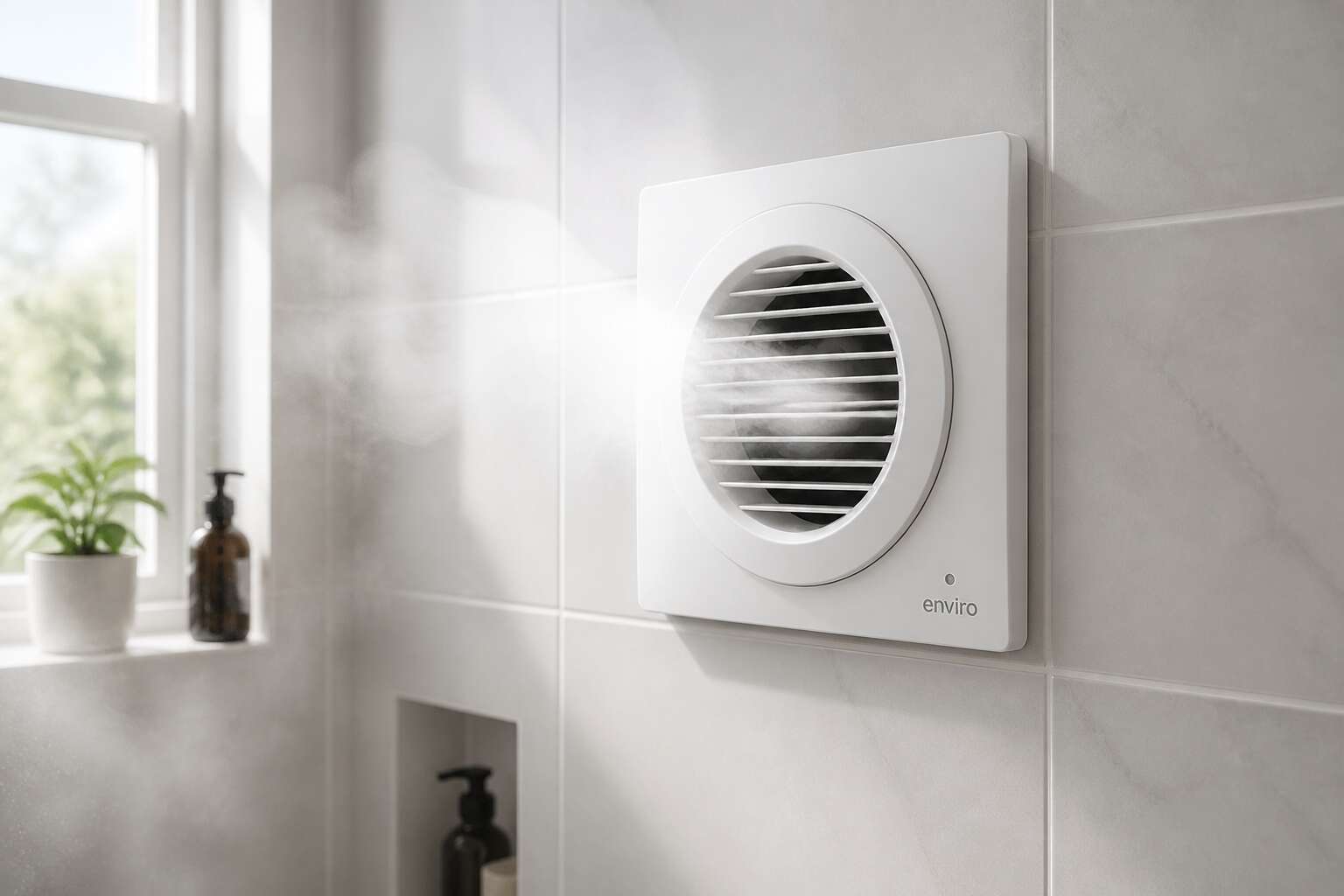
Understanding 200mm Extractor Fans
What Is a 200mm Extractor Fan and How Does It Work?
Coastal humidity and interior dust are two persistent problems in South African homes. A 200mm extractor fan in South Africa addresses both, yet few of us stop to consider how it actually works.
The 200mm measurement refers to the diameter of the blade housing. That size suits bathrooms, kitchens, and medium sized rooms. The motor spins the blades, drawing air through the intake grille and pushing it out through ducting.
This movement creates a pressure difference. Fresh air enters under doors or through windows, while stale air is forced out, preventing condensation from settling on walls and ceilings.
Consider what the unit does in a typical home:
- Removes steam after a hot shower.
- Clears cooking smells before they linger.
- Lowers the temperature in small enclosed rooms.
The 200mm extractor fan south africa market includes axial and centrifugal models. Axial units move high volumes against low resistance, ideal for short ducts. Centrifugal fans handle longer duct runs.
Common Applications in South African Households
Humidity in South African homes is not a seasonal nuisance, it is a structural conversation. The 200mm extractor fan south africa market thrives because these units answer a specific spatial dilemma: the enclosed bathroom with no window, or the kitchen that holds heat long after the stove cools. Homeowners in coastal regions like Durban or Cape Town find that a single unit transforms a mould prone ceiling into a reliable surface.
The practical deployment of a 200mm fan extends beyond simple ventilation. Consider the daily combat zones:
– The main bathroom, where a shower produces two litres of steam in ten minutes.
– The kitchen scullery, where cooking odours settle into fabrics and wooden cabinetry.
– The home office, where equipment heat accumulates in a three by three metre space.
– The laundry room, where moisture from drying clothes lingers without a draught.
For smaller apartments in Johannesburg, a 200mm extractor fan south africa installation often replaces the need for an open window entirely, an advantage during highveld winters. The performance of these fans also suits the typical ducting setup in local townhouses, where the run from ceiling to exterior wall rarely exceeds two metres. That direct path, combined with the blade diameter, creates a steady air exchange that feels unobtrusive yet decisive.
Key Differences Between Axial and Centrifugal Fans
The choice between axial and centrifugal designs determines how a 200mm extractor fan south africa performs under real conditions. An axial fan moves air along the same axis as its blades, an efficient mechanism for short, straight duct runs found in many local bathrooms. A centrifugal fan draws air into an impeller and forces it outward through a volute casing, creating static pressure that overcomes bends, vertical risers, and external weather flaps.
Consider these distinctions before installation:
- Axial fans deliver strong airflow only when the duct path stays short and unobstructed.
- Centrifugal units maintain extraction rates even when forced to push against resistance.
For older Johannesburg houses and coastal apartments, the ducting route rarely follows a straight line. That reality pushes many homeowners toward the centrifugal option, though the 200mm extractor fan south africa market offers both at comparable price points.
Why 200mm is a Popular Size for Local Kitchens and Bathrooms
Walk into any South African hardware store and the same number repeats across the ventilation aisle: 200 millimetres! I have watched contractors reach for this size without hesitation, whether they are fitting a bathroom in a Durban high-rise or a kitchen in a Free State farmhouse. The 200mm extractor fan south africa sits between the 400-millimetre centres of standard ceiling joists while still moving enough air for rooms up to twelve square metres.
The popularity also rests on economics:
- Local manufacturers produce 200mm housings, spigots, and grilles in high volumes, which keeps prices lower than any other size class.
- The standardised footprint means homeowners replace old units without cutting new openings.
- Retail stock availability exceeds all other fan diameters, reducing lead times.
Key Features and Specifications to Look For
Airflow Rate (CFM/m³/h) and Suitability for Room Size
Airflow rate should be the first thing you check, not the fan’s physical size. Measured in cubic meters per hour (m³/h) or liters per second, this number determines if the fan can actually clear steam, smoke, and odors from a space. Many units claim a high wattage motor, but the airflow rating is what tells you the real performance. For a standard South African kitchen, you want a minimum of 200 m³/h to manage cooking fumes from a typical four plate stove. Bathrooms, being smaller, can operate well with a lower flow, but you still need to calculate the room’s volume to be sure.
A simple calculation involves multiplying the length, width, and height of the room in meters to get the volume. You then multiply that volume by a recommended air change rate, which is roughly ten for kitchens and eight for bathrooms. For a 12 square meter kitchen with a 2.7 meter ceiling, that gives you over 320 m³/h required. This means a basic 200mm extractor fan south africa model might fall short. Here is a practical breakdown of airflow requirements:
- Small bathroom (up to 5m²): look for fans around 100 to 150 m³/h.
- Medium kitchen (8 to 12m²): target between 200 and 300 m³/h.
- Larger open plan areas: you will need 300 m³/h or more, possibly a second fan.
Do not ignore this calculation just because the fan is a standard size. The physical diameter of 200mm does not guarantee the volume of air it will move. Look for the specific flow rate printed on the box or in the online product description. A high airflow rate also comes with more noise, so check the sone rating if the fan will be in a bedroom or lounge. Ultimately, the right 200mm extractor fan south africa for your home is one where the stated cubic meters per hour matches the size of the room, not one that simply fits the hole in the wall. Remember that ducting reduces airflow, so always add a margin to your calculations.
Noise Levels (dB) and Sound Quality for Quiet Operation
Quiet operation matters more than most buyers realise, especially in open plan living spaces. A 200mm extractor fan south africa rated under 40 dB will not interfere with conversation or television. Above 55 dB, the hum becomes intrusive, particularly at night.
Sound quality involves more than the number on the spec sheet. Some fans produce a smooth airflow tone while others emit a high pitched whine. The difference comes from motor bearings and blade geometry. Shaded pole motors and EC motors tend to run quieter than older induction types.
Key specifications to compare:
- dB rating measured at one metre
- RPM range and low speed settings
- Motor bearing type and housing material
A lower RPM does not always mean quieter operation if the housing vibrates. Rubber grommets or anti vibration mounts reduce that resonance. These details explain why two 200mm extractor fan south africa models with the same diameter can sound completely different.
Power Consumption and Efficiency Ratings
Eskom tariffs keep climbing, so the wattage stamped on a 200mm extractor fan south africa deserves scrutiny. Most units pull between 25 and 60 watts, which sounds harmless. Run one for six hours a day and the annual cost lands around R300. I have seen homeowners ignore this until the first winter bill arrives. The metric that matters is airflow per watt. A 600 m³/h fan at 40 watts outperforms a 500 m³/h fan at 60 watts.
The motor winding and capacitor quality define efficiency. A good 200mm extractor fan south africa converts nearly all input energy into rotation, not heat. Check these numbers before buying:
- Input wattage at maximum speed
- Cubic metres per hour divided by watts
- Standby draw on remote control models
An efficient unit recoups its price gap within two years. That is the kind of payback every household needs!
Durability and Build Materials Against Humidity
Buying a 200mm extractor fan south africa without inspecting the build materials invites early failure. Coastal humidity and the damp of a Durban bathroom will corrode cheap galvanised steel within a season. The plastic matters equally. ABS or polypropylene resist UV degradation and warping, while thinner grades become brittle and crack over time.
The motor housing deserves attention. Sealed ball bearings outperform sleeve bearings, which draw moisture and fail without warning. An IPX4 rating for splash resistance is worth the extra cost in any room that generates steam. Check the casing seams and the fan blade edges for rough moulding, a sign of hasty manufacturing.
- Check for corrosion resistant fasteners
- Confirm the casing includes drainage channels
- Verify the warranty covers rust damage
These specifications separate a durable unit from one that fails within months.
Additional Features: Backdraft Shutters, Timer, and Humidity Sensors
Backdraft shutters are the difference between an extractor fan and an unintended vent for the neighbour’s braai smoke. Without them, a 200mm extractor fan south africa sits idle and lets outside air, dust, and the occasional gecko wander in. A gravity operated shutter that closes cleanly when the motor stops is a small feature with outsized value.
Timers and humidity sensors fix the opposite problems. A timer stops the embarrassment of leaving the fan running for six hours. A humidity sensor does something more clever: it runs the fan until the steam actually clears, which matters in a Durban bathroom where moisture lingers long after the shower ends.
- Find a shutter with a rubber gasket to reduce drafts
- Check the timer adjusts to your routine, not a fixed delay
- Ensure the humidity sensor threshold is adjustable for coastal climates
Certifications and Compliance with South African Safety Standards (SABS)
A 200mm extractor fan south africa buyers consider should carry an SABS mark or an NRCS Letter of Authority. These confirm the unit meets electrical insulation, thermal cutoff, and moisture resistance requirements. The SABS mark scheme covers fans under SANS 60335-2-80.
- SANS 60335-2-80 governs household fan safety.
- IP ratings define bathroom zone protection.
- Certificate numbers appear on the rating plate.
Traceable compliance separates a dependable fan from a hidden hazard. Missing certification often signals absent earthing or flammable housing. That risk matters in humid coastal homes.
Choosing the Right 200mm Extractor Fan for Your Space
Matching Fan Capacity to Bathroom and Kitchen Dimensions
A 200mm extractor fan south africa might seem like a single solution, but its real efficiency depends on the cubic volume it serves, not the floor area. A bathroom with a 2.1 meter ceiling needs far less capacity than a kitchen with a 3 meter ceiling, even when the square footage is identical.
The key metric is air changes per hour. Bathrooms typically require eight air exchanges per hour to clear steam, while kitchens need six to cope with grease. To match capacity, multiply length, width, and height to get cubic meters, then divide the fan’s rated m³/h by that volume.
Here is a practical reference for a 2.4 meter ceiling:
– A 200mm fan moving 700 m³/h suits a bathroom up to 36 cubic meters.
– The same fan works in a kitchen up to 42 cubic meters.
– Larger spaces demand a centrifugal unit or supplementary ventilation.
Getting this wrong leads to persistent moisture or lingering cooking smells! For South African homes, where load shedding often forces reliance on passive ventilation, aligning fan capacity with dimensional realities matters more than raw power.
Considering Ceiling vs. Wall-Mounted Installations
The choice between ceiling and wall mounting for a 200mm extractor fan south africa is rarely cosmetic. It is a decision that dictates ducting routes. Ceiling installations in single storey homes can vent directly through the roof, which is a shorter path for stale air to travel. Wall mounting, however, often requires navigating horizontal runs that reduce effective airflow.
South African roofs can be unforgiving spaces with insulation and trusses to contend with. A wall unit places the motor where you can reach it without a ladder. A ceiling fan, when wired to a humidity sensor, becomes a passive guardian against mould.
Consider these practical distinctions:
– Ceiling fans work best when the duct run is under one meter.
– Wall fans suit renovations where roof access is restricted.
– Ceiling units must be accessible for annual cleaning.
These elements of installation determine whether the fan fights the architecture or works with it.
Ducting Options and Ventilation Paths in South African Homes
A 200mm extractor fan south africa depends on the duct that carries its air. Rigid PVC pipe offers the least resistance. Flexible foil ducting, common in local hardware stores, bends and sags, and every crease steals pressure from the motor.
Roof voids in South African homes are seldom kind. Trusses, insulation, and legacy wiring crowd the space. The shortest path between the fan and the outside wall is often the wisest, but a vertical rise through the ceiling can suit some floor plans.
- Keep rigid duct runs straight and under two metres.
- Use semi-rigid aluminium for a single gentle bend.
- Insulate ducting that crosses cold roof cavities.
Selecting Between Manual, Pull-Cord, and Smart Control Models
Choosing between control types can decide whether your 200mm extractor fan south africa installation feels effortless or frustrating. I have watched homeowners curse a poorly placed pull-cord in a cramped bathroom, while others praise a humidity sensor that switches the fan on before steam gathers! Your routine matters more than the price tag.
Consider how the fan will be used daily. A pull-cord keeps things mechanical, no wiring complications. A wall switch offers familiar control. Smart models, though pricier, adapt to usage patterns and can be linked to home assistants.
Control options to weigh before purchasing:
– Pull-cord for retrofit ease
– Wall switch for minimalist aesthetics
– Smart controls for automation and remote access
For a 200mm extractor fan south africa, the control style should match the room’s layout and your patience for maintenance.
Evaluating Climate Factors: Coastal Humidity vs. Inland Dryness
Durban’s air carries enough salt to corrode metal components remarkably quickly. I have seen coastal fans rust into decorative sculptures within two years. A 200mm extractor fan south africa mounted in a coastal bathroom needs protective coatings and sealed motors. Inland, the challenge shifts. Johannesburg’s dry conditions produce fine dust that settles on blades and gradually reduces airflow.
Climate factors to assess:
- Salt-resistant housing for coastal installations
- Sealed bearings for humid and saline environments
- Removable, washable blade assemblies for dusty regions
The coastal buyer should prioritise corrosion protection. The inland buyer should prioritise maintenance access. Manufacturers who ignore these regional quirks produce fans with disappointingly short lifespans.
Installation and Maintenance Best Practices
Step-by-Step Installation Guide for DIY Enthusiasts
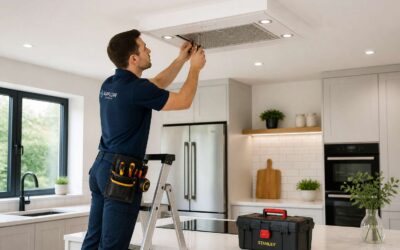
Installing a 200mm extractor fan south africa starts with measuring the exact cutout diameter. Most 200mm units fit standard ceiling openings, but walls with timber studs need a different approach. Mark the mounting holes, drill pilot holes, and secure the bracket before touching any wiring. I always advise taking a photo of the existing wiring first.
The safe sequence for DIY work is straightforward:
- Switch off the circuit breaker and test the wires with a voltage tester.
- Mount the fan body to the bracket, keeping the ducting connection free.
- Connect the live, neutral, and earth wires according to the wiring diagram.
- Fit the cover and test the backdraft shutter movement by hand.
Cleaning a 200mm extractor fan south africa every quarter extends its service life. Remove the cover, wipe down the impeller, and inspect the ducting for blockages. In coastal provinces, check for salt buildup on the grille and metal fasteners.
Electrical Wiring Safety and Professional Requirements in SA
Opening the junction box on a 200mm extractor fan south africa without a training certificate is where a home project meets the law. The Electrical Installation Regulations, enforced by the Department of Employment and Labour, require that any permanent connection to the mains supply be certified by a registered person.
Here is the practical reality:
- The main switch must be locked off before the fan is wired
- A multimeter confirms the circuit is dead before you touch the terminals
- An electrician must sign off on the earth continuity
That electrician will issue an installation certificate of compliance, which stays with the property. When you sell the house, that document proves your 200mm extractor fan south africa was installed to SANS 10142 wiring codes. It also matters during an insurance assessment, because a missing certificate can void a claim after a surge or fire. Keep the paperwork with your electrical box! It costs a little to obtain, but it safeguards the whole installation.
Cleaning and Servicing to Prolong Fan Lifespan
A 200mm extractor fan south africa moves hundreds of cubic metres of air per hour. What it pulls in, it keeps. Dust, grease, and moisture settle on the blades and bearings, cutting airflow and straining the motor.
Twice a year, remove the front cover and wipe the impeller with a damp cloth. Clear the motor vents with a small brush. Check the backdraft shutter for stuck flaps. Inspect ducting in the ceiling cavity for sagging or disconnection.
For routine servicing:
Remove and wash the grille in warm soapy water.
Vacuum the duct opening at the wall or window.
Listen for rattles or humming that indicate worn bearings.
Test the fan speed with a piece of toilet paper held to the grille.
This schedule applies to every 200mm extractor fan south africa, whether axial or centrifugal. Regular attention keeps the unit quiet and efficient.
Troubleshooting Common Issues: Noisy Fans, Poor Airflow, or Vibration
Installation mistakes create most performance problems. A 200mm extractor fan south africa installed with sharp duct bends loses airflow and generates whistling noises. Check that the duct run is as short and straight as practical.
For troubleshooting, start with the visible components. Remove the grille and inspect the impeller for dirt buildup. Clean the fan blades with a damp cloth. This solves many airflow complaints.
- Vibration usually means loose mounting screws.
- Humming may indicate a failing bearing or a stuck backdraft shutter.
- Poor airflow often comes from a crushed flexible duct.
Once the screws are retightened, the shutter blades aligned, and the duct replaced, the unit runs quieter.
When to Replace or Upgrade Your Existing Extractor Fan
Getting an extractor fan right starts with the ductwork, not the switch. Even a premium 200mm extractor fan south africa performs poorly if the ducting snakes through tight corners or collapses under its own weight. A rigid or semi-rigid duct run, kept as straight as possible, delivers the flow rate on the box. Flexible ducting is convenient, but its corrugated surface and sharp bends reduce effective extraction by a measurable margin. For installers, the rule is simple: measure twice, cut once, and secure every joint. Those details prevent the majority of performance complaints we see in local homes.
Choosing a robust unit from the outset avoids frustrating early replacements. A 200mm extractor fan south africa built with a galvanised steel body and a quality motor handles continuous operation in coastal bathrooms better than an economy model. That initial cost difference pays off in longevity. Still, no fan lasts forever, and recognising the signs of impending failure saves on electrical repairs.
– The motor becomes sluggish or produces a low hum even after cleaning.
– Increasing static pressure from the fan casing, often felt as weak output.
– Visible corrosion on the casing or impeller after a few years.
– The backdraft shutter sticks open or closed, compromising ventilation.
Motors lose efficiency over time. A unit running continuously at high speed, particularly in dusty Highveld conditions, may draw more current while delivering less airflow. Switching to a fan with a higher airflow per watt rating can slash running costs. Also, newer models offer features like humidity sensors that old units lack. If your current fan requires regular manual switching and your bathroom mirrors still fog up, the upgrade path is clear. Modern controls and better blade geometry make a noticeable difference. If you have faced recurring costly repairs, the investment in a new unit is often the more economical choice.
Energy Efficiency and Running Costs in South Africa
Estimating Annual Electricity Usage Based on Local Tariffs
Energy efficiency rarely sparks dinner party conversation. But in South Africa, where electricity tariffs have climbed relentlessly, the running cost of a 200mm extractor fan south africa deserves a second glance. Most models draw between 15 and 25 watts, which is modest. Yet continuous use, especially in coastal kitchens or steamy bathrooms, adds up over a year.
Let’s do the arithmetic with local numbers. Eskom’s current tariff sits around R2.50 per kWh for residential users. Run a 20 watt fan for three hours daily. That is 21.9 kWh annually, or roughly R55 per year. For that price, you get a bathroom free of mould and a kitchen that doesn’t smell like last night’s snoek. Not a bad trade.
Operating costs depend on your usage pattern. A fan with a humidity sensor might cycle on and off, reducing total runtime. A timer does the same, but relies on your discipline. The difference between a 15 watt and a 25 watt model amounts to about R27 per year, which is negligible compared to the purchase price. Efficiency matters more for heat removal than for your wallet.
- 20 watt fan, 3 hours daily: R55 per year
- 25 watt fan, 3 hours daily: R68 per year
- 15 watt fan, continuous run: R329 per year
The figures change if you live in a high humidity region and run the fan all day. Then the annual cost climbs to a few hundred rand. That still undercuts the damage caused by peeling paint and warped cupboards. When you compare the expense against structural repairs, the 200mm extractor fan south africa remains a cost effective appliance.
Comparing Low-Energy Models vs. Standard Fans
The quiet hum of a 200mm extractor fan south africa masks a significant difference in engineering. Standard models rely on shaded pole motors, an older technology that draws a steady 20 to 25 watts regardless of airflow demand. Low energy versions use electronically commutated motors, which sip power more selectively and adjust speed based on resistance in the ducting.
The gap widens when you consider operational patterns. A standard fan running for six hours in a Durban bathroom consumes roughly R130 per year at current tariffs. A low energy equivalent, drawing only 10 watts, cuts that figure to R52. The savings seem modest on paper, but they compound across multiple rooms. Homes with three extractors, kitchen, bathroom, and laundry, might save R230 annually.
– Standard AC motor: 20 to 25 watts, constant draw
– EC motor: 8 to 12 watts, variable speed
– Humidity sensor models cycle intelligently, reducing runtime
– Annual saving per fan: R50 to R80 depending on usage
The payback period for the higher purchase price of a low energy 200mm extractor fan south africa runs between two and three years for a household that uses the fan heavily. After that, the efficiency becomes pure gain. The real advantage emerges in coastal regions where humidity sensors keep fans running intermittently throughout the day. There, the EC motor’s ability to run at partial speed without wasting energy proves more valuable than the wattage difference suggests. Standard fans offer reliability and lower upfront cost, but the energy profile of a 200mm extractor fan south africa with modern electronics aligns better with continuous, sensor driven operation typical of South African bathrooms.
Incorporating Extractor Fans into a Greener Home Strategy
South African households are shifting toward energy conscious renovations, and the 200mm extractor fan south africa is a small component with measurable implications. When integrated into a broader strategy, one that considers solar generation or time of use tariffs, the ventilation load becomes manageable. Every appliance that runs efficiently reduces reliance on backup power during Eskom’s constrained periods.
This matters because extractor fans operate autonomously. A fan with a humidity sensor in a Durban bathroom cycles through the day without human input. That autonomous operation either works for you or against you, and the difference depends on the electronics inside.
A green home strategy benefits from examining ventilation alongside insulation and glazing:
– Sealed homes need controlled extraction to manage indoor air quality
– Low wattage fans preserve inverter battery capacity during outages
– Timed extraction aligns with energy pricing windows
The 200mm extractor fan south africa becomes part of a system, not an afterthought.
Rebates or Incentives for Energy-Efficient Ventilation Equipment
The rebate landscape for ventilation equipment in South Africa remains sparse. National programmes like Eskom’s Integrated Demand Management once offered incentives for efficient motors, but residential extractor fans rarely qualified. A 200mm extractor fan south africa typically falls outside current rebate criteria, which target larger commercial loads.
Municipalities occasionally pilot energy efficiency schemes. The City of Cape Town’s Smart Living programme and certain eThekwini initiatives have offered subsidies for efficient appliances. Ventilation equipment seldom appears on these lists. The useful consideration is cost avoidance, not rebates:
- Lower wattage fans reduce monthly consumption
- Efficient models extend battery backup during loadshedding
- Reduced heat extraction lowers air conditioning load
The financial case rests on operational savings.
Top Brands and Where to Buy in South Africa
Popular International and Local Brands Available Locally
The South African ventilation market offers a surprising range of 200mm extractor fan south africa models. International names like Soler & Palau and Xpelair sit alongside trusted local manufacturers such as Cape Fans, each with distinct strengths for coastal or highveld conditions.
Builders Warehouse and select electrical wholesalers stock the most common units. For wider choice, online retailers such as Takealot and specialist ventilation suppliers provide access to premium and budget options:
– Soler & Palau for durable centrifugal units
– Cape Fans for an established local heritage
– Xpelair for integrated humidity sensors
– Cheaper imports for basic axial replacements
Check the SABS approval mark before purchasing. A 200mm extractor fan south africa from a recognised brand will last longer and perform closer to its stated airflow rating.
Online Retailers vs. Brick-and-Mortar Hardware Stores
Online retailers offer the widest selection of 200mm extractor fan south africa models, but delivery times can stretch to a week or more, especially outside the main metros. Brick-and-mortar hardware stores give you the advantage of checking the SABS approval mark in person and walking out with a unit the same day.
Builders Warehouse and dedicated electrical wholesalers keep a solid mid-range stock. Premium units from Soler & Palau or Xpelair often require an online order. Takealot and specialist ventilation suppliers carry the deepest inventory, including spare parts and ducting accessories.
- Physical stores simplify warranty claims with face-to-face service
- Online retailers usually list better prices on premium brands
- Specialist sites offer technical advice before you commit
- Hardware stores let you inspect the build quality directly
Your choice depends on whether you prioritise immediate availability or a broader catalogue. Both routes serve the South African market well.
Price Ranges and Budget-Friendly Options
No two 200mm extractor fan south africa purchases look alike, and that reality often mirrors the buyer’s priorities. Local manufacturing has kept entry level models remarkably affordable, with brands like Air King and Mustek dominating the budget bracket. Their prices hover around the R350 to R600 mark, which makes decent ventilation accessible to most households. However, a cheaper unit often reveals its limitations through noisier operation and less efficient motors over time.
The premium tier tells a different story. Soler & Palau and Xpelair units command anywhere from R1,200 to R2,500, and they justify that gap through superior bearing quality and quieter impeller designs. For those chasing both performance and longevity, this investment usually pays off.
When sourcing these units, consider these factors:
– Builders Warehouse carries dependable mid-range stock, though their premium options remain limited
– Specialist ventilation suppliers offer deeper expertise and better warranty support
– Online marketplaces frequently undercut retail prices, but delivery windows can test your patience
The price range ultimately shapes your decision, yet so does the humility of understanding what you truly need. A bathroom used twice daily rarely demands a high-end centrifugal unit, whereas a kitchen venting heavy cooking fumes benefits from the stronger static pressure of a premium axial fan. Both options serve the South African market well; your circumstance simply determines which one serves you better.
Warranty and After-Sales Support Considerations
Choosing where to purchase your 200mm extractor fan south africa is as important as choosing the fan itself. Local hardware chains like Builders Warehouse and Leroy Merlin offer convenient browsing, but specialist ventilation suppliers often provide superior product knowledge and longer warranty support. For online shoppers, takealot.com and bidorbuy frequently have competitive pricing, yet always verify the seller’s warranty terms before committing.
Warranty coverage varies widely across brands. Soler & Palau and Xpelair typically include two year warranties, while budget models may only offer six months. Consider the following when evaluating after-sales support:
- Confirm the warranty covers labour, not just the motor
- Check if the supplier has an authorised service centre in your province
- Ask about replacement parts availability for the specific 200mm extractor fan south africa model
A robust warranty arrangement protects your investment long after installation, so treat the fine print as part of the purchase decision.
Customer Reviews and Reliability Insights from SA Users
South African owners have developed a sharp eye for what fails first in a 200mm extractor fan south africa installation. Across Takealot reviews and community forums, the most recurring complaint involves the backdraft shutter. A rattling flap within eighteen months appears frequently enough to warrant attention before purchase, even for Soler & Palau and Xpelair models that otherwise draw praise for sturdy motors.
Climate shapes expectations considerably. Cape Town residents describe salt-laden air attacking exposed screws, while Highveld users report dust clogging motor housings. Fans with sealed bearings and coated grilles earn repeated recommendations from owners who have run them for years.
- Longer review threads reveal longevity patterns that short-term ratings mask
- Humming noise complaints outnumber motor failure reports by a wide margin
- Brand responsiveness in public forums varies noticeably from warranty policy language
Ensuring Authentic Products and Avoiding Counterfeits
Counterfeit ventilation hardware has quietly infiltrated South African supply chains. A genuine 200mm extractor fan south africa carries subtle markings you can verify in seconds. Shoddy imitations often omit the SABS approval logo or print it with visible errors.
Stick to established suppliers such as Voltex, Builders Warehouse, and reputable online sellers who display their VAT numbers. I once bought a lookalike from an unknown vendor, and the motor failed within six weeks. Genuine units from Soler & Palau or Xpelair include online serial verification.
- Inspect packaging for tamper-proof stickers
- Request an original invoice with the physical address
- Cross-check the certification label against SABS’s registry
Local hardware chains remain the safest route for authentic stock.


0 Comments