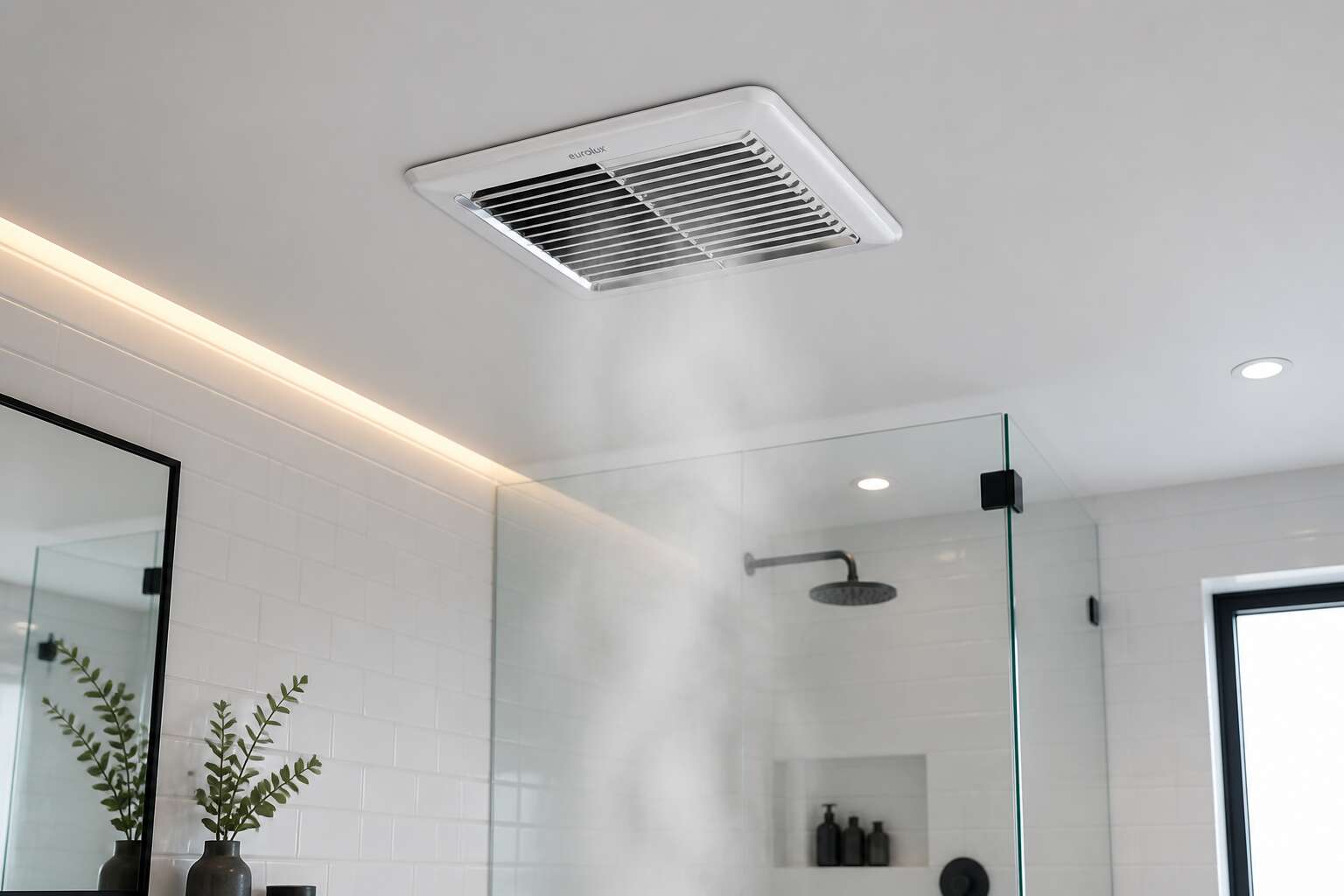
The Importance of Proper Ventilation in Midrand Homes
How the Midrand Climate Affects Indoor Air Quality
The Highveld atmosphere is a capricious beast. In Midrand, the summer thunder bursts leave a wet blanket of humidity, while winter’s arid chill dries the throat. This relentless fluctuation invades our homes, trapping moisture inside the very plaster, a persistent foe indeed!
Without an escape, this stagnant air grows heavy. It harbours invisible spores and the ghost of every meal cooked, every breath exhaled. The air becomes a silent, oppressive weight on your lungs.
Here is what proper airflow actively prevents:
– The creeping decay of mould on window sills.
– The stagnation of airborne pollutants.
– The persistent, damp odour of old towels.
To combat this spectral dampness, you need a mechanical exorcist. Installing high-quality extractor fans midrand is the definitive answer. They pull the musty air out, dragging the humidity with it, restoring a breathable clarity to your living space so the home remains a sanctuary, not a crypt.
Health Risks of Poor Ventilation and Humidity Build Up
The silence in a poorly ventilated Midrand home is not peace. It is the sound of trapped breath. Winter seals the windows, and moisture from cooking, washing, and living settles into the walls. That dampness becomes a slow poison. It aggravates asthma, irritates skin, and invites respiratory infections to linger longer than they should.
The health risks are not hypothetical. They manifest as:
– A persistent, unexplained cough.
– Headaches that appear only indoors.
– Fatigue that sleep cannot cure.
– Irritated eyes and a raw throat.
Humidity build up also feeds dust mites and fungal spores, invisible occupants that thrive where air refuses to move. Installing extractor fans midrand removes the moisture at its source, before it can corrupt the air you breathe.
The Connection Between Extractor Fans and Energy Efficiency
Proper ventilation in Midrand homes protects the building structure. Cooking vapours, moisture, and airborne grease settle on walls and ceilings. These residues degrade paint and timber over time. An extractor fan removes them at the source before they cause costly damage.
The connection between extractor fans midrand and energy efficiency is direct. A fan that runs for ten minutes after cooking clears hot, humid air. This reduces the load on your cooling system in summer. In winter, it removes dampness that otherwise makes air feel colder. Less energy spent on heating and cooling means lower utility bills! The right fan size and motor rating matter. A professional can calculate the airflow to match your kitchen or bathroom. That precision prevents wasted electricity.
Choosing the Right Extractor Fan for Midrand Properties
Axial vs. Centrifugal Extractor Fans for Local Conditions
Midrand properties present a curious puzzle to the ventilation specialist. The Highveld light, so bright it seems to hum, pours through windows that often stay sealed against the noise of the N1. One must consider not only the volume of air to be moved, but the character of the air itself. For the steady, silent exchange needed in a study or a bedroom, an axial fan performs its quiet work. Its simple blades spin like a slow carousel, pushing air directly along one axis, ideal for straight, unobstructed wall openings.
Yet the true test comes with the long duct runs common in double-storey Midrand homes. Here, the centrifugal fan becomes the quiet hero, its impeller winding air like a thread, building pressure to overcome the resistance of the bends. This pressure is the very currency of effective extraction, a fact often forgotten when choosing extractor fans midrand. The wrong choice leads to a whisper of stale air where a current should be.
Consider what your sanctuary requires:
- A ducted path to the roof, or a direct vent through the brick.
- The available wall depth, which can be surprisingly generous in older Midrand estates.
- A motor that scoffs at the Highveld’s thin air, a motor that thinks in pressure, not just speed.
Installing a sophisticated system that merely churns the same warm air is a common folly. The correct selection is a matter of physics, not commerce. After the load-shedding schedule, a new variable enters the dance: restarts and brown-outs. A centrifugal unit with a quality capacitor handles the erratic power supply with a measure of grace.
For a conventional, direct-through-wall installation, the axial unit is frequently sufficient, a workhorse for the open kitchen that flows onto a patio. But for the enclosed bathroom or the interior scullery, the centrifugal fan’s ability to push air through a metre of flexi-duct is not a luxury, it is a necessity. Understanding this distinction transforms your decision from a gamble into a considered, effective act. The real skill lies in matching the machine to the specific bones of your home.
Inline Concealed Extractor Fans for Modern Kitchen and Bathroom Fits
Modern kitchen design in Midrand hides ventilation behind cabinetry and recessed ceilings. For extractor fans midrand, an inline concealed fan makes this possible, but only with careful duct path and motor placement. Bathroom bulkheads leave even less room for error!
Consider these factors before committing to a concealed setup.
- The distance from steam or odour source to the external wall.
- The duct diameter, since narrow pipes increase resistance.
- Access for cleaning and motor replacement, because hidden units are hard to reach.
The inline fan sits inside the duct run, pulling air through bends before it exits. This suits open-plan kitchens where a visible wall-mounted unit ruins clean lines. In bathrooms, one concealed motor can serve both a toilet and a shower. Motor bearings and thermal cut-outs must cope with humid Midrand air. Choosing extractor fans midrand means balancing these technical demands with the visual appeal of a hidden system.
Flow Rate Calculator for Midrand Room Sizes
Selecting extractor fans midrand requires a calculation based on room volume, not guesswork. A bathroom of six square metres with a two point four metre ceiling needs a different airflow than a double volume entrance hall.
Work through the numbers. Multiply floor area by ceiling height to get cubic metres. Then multiply that figure by the required air changes per hour. Kitchens generally need twelve changes, bathrooms ten, and living spaces six.
- Measure the room length and width in metres.
- Multiply to find the floor area.
- Multiply by ceiling height for the volume.
- Apply the air change rate for that room type.
That final figure is the cubic metres per hour rating you need from the unit. Oversizing leads to unnecessary cost, while undersizing leaves moisture trapped in the structure. Midrand properties vary widely in layout, so the correct airflow depends entirely on the room dimensions.
Maintaining Safety and Performance
Midrand’s electricity supply can dip by fifteen percent during peak load. Choosing the right extractor fans midrand therefore demands attention to voltage tolerance, ducting, and isolation. A motor with thermal protection handles these swings. A fan without a backdraught shutter lets cold night air pour back into the bathroom. Safety requires an isolator switch and a condensate trap on vertical runs.
Performance depends on static pressure. A 100mm fan pushing through a three metre flexible duct will struggle. Measure the duct path and count bends before purchase. In older Midrand homes, cavity walls hide vermiculite or rubble that can crush a soft hose.
- Check the ingress protection rating for wet zones.
- Confirm the impeller can be removed for cleaning.
- Inspect the external louvre for free movement.
The best unit runs quietly, out of sight, and without complaint. That is the true measure of performance.
The Role of Automatic Humidistat and Thermistor Models
During a Midrand summer, relative humidity inside a closed bathroom can climb beyond eighty five percent within a single shower. That persistent moisture demands smarter equipment. The choice of extractor fans midrand usually comes down to how a unit detects the problem. A humidistat model triggers when airborne water vapour crosses a threshold, responding to conditions, not schedules. A thermistor model reacts to the sudden temperature spike from running hot water. The detection method changes behaviour in real homes:
- Humidistat fans suit bathrooms with irregular use, where moisture lingers between showers.
- Thermistor fans catch the heat burst of a morning routine in households with fixed timings.
- Combination units offer both detection paths for households without a routine.
Choosing between them requires observing your own occupancy patterns. The right extractor fans midrand operate with patience. They wait for evidence. They act when the room becomes uncomfortable, before damp air migrates into the corridor.
Commercial Extractor Fan Options for Midrand Restaurants and Offices
When you run a restaurant or an office in Midrand, the ventilation system is more than a convenience. It is a legal requirement, a safety measure, and a tool for keeping staff productive. Choosing the right extractor fans midrand for commercial use demands a different approach than residential units. A kitchen that serves three hundred covers a day produces grease-laden vapour, heat, and odours that a standard bathroom fan simply cannot handle. An office with meeting rooms and a small pantry has its own challenges, usually around stale air and humidity from coffee stations and restrooms.
For restaurants, the priority is capturing contaminants at the source. A canopy hood above the cooking line needs a fan that moves large volumes of air against static pressure from ductwork. Centrifugal fans are often the default here because they handle resistance well. But there is another factor: the fan must be positioned to keep motor heat away from the exhaust stream, especially when cooking with open flames. Fire safety regulations in South Africa require specific clearance distances and sometimes fire-rated ducting. Ignoring these details can void your insurance.
Offices present different constraints. Noise levels matter in a space where people take calls and concentrate. A fan that sounds like a jet engine at 9am will not be tolerated. Mixed-flow or backward-curved inline units are common solutions because they deliver decent airflow at lower sound levels. Also consider variable speed controls. A boardroom used four hours a day does not need the same airflow as a gym or a printing room that runs continuously. Energy consumption, which we have touched on elsewhere, becomes a long-term cost for commercial operations.
Here are the key checks before you select any unit for a Midrand property:
- Measure the duct length and diameter to calculate static pressure, not just room volume.
- Confirm the fan motor is rated for continuous operation if the kitchen runs from breakfast to late dinner.
- Check the IP rating for washdown areas or outdoor installation, where moisture resistance is critical.
- Verify that the unit meets SANS 10400 Part O ventilation requirements for your specific occupancy class.
- Ask about spare parts availability in Gauteng, because downtime in a restaurant kitchen costs money within hours.
The placement of the fan also changes the spec. A roof-mounted unit is one thing. A wall-mounted or ducted inline unit is another. Roof installations expose motors to Highveld thunderstorms and UV radiation, so a weatherproof casing is not optional. Indoor units need fire dampers where they pass through walls, and the electrical isolation switch must be accessible to maintenance staff.
One mistake we see repeatedly is choosing a fan based on the size of the room alone. That approach fails for commercial spaces. A large open-plan office with high ceilings and a small enclosed server room needs zoned ventilation, not one giant fan. Similarly, a restaurant with an open kitchen and a separate dishwash area has two distinct extraction needs. The dishwash area produces steam without grease, so a lighter duty fan works, while the cooking line needs heavier equipment.
Finally, think about who will service the fan. Commercial extractor fans midrand installations should come with a maintenance schedule. Filters need cleaning weekly in a greasy kitchen. Belt-driven fans need tension checks. Motor bearings have a lifespan that depends on running hours. If your contractor does not provide a service plan, you are setting yourself up for mid-service failures.
The right choice lives in the details. Talk to a ventilation specialist who has installed units in Midrand commercial buildings, not just someone selling off-the-shelf residential models. They will ask about your menu, your peak hours, your ceiling heights, and your building’s duct path. Those answers lead to a fan that actually performs, and that is what keeps your kitchen staff comfortable and your office workers alert.
Cost and Energy Efficiency Factors in Midrand
Purchase Price Ranges in Midrand Retailers
The sticker price on extractor fans midrand can differ by more than three times between entry level and industrial units, yet the initial figure only tells part of the story. The real cost emerges from the monthly electricity bill.
Midrand retailers stock a range of options:
– Basic axial fans from R600 to R1200, ideal for small bathrooms
– Inline centrifugal models from R1500 to R3500 with lower wattage ratings
– Commercial grade units above R4000 with variable speed drives
The energy efficiency factor comes down to the airflow per watt ratio. A pricier fan with superior aerodynamics moves more air at a lower current draw, which makes the purchase price range in Midrand retailers less important than the operating cost over a decade. The power consumption figures printed on each unit reveal this difference clearly.
The most expensive extractor fans midrand often show a lower total cost of ownership across a five year period.
Installation Costs Labour and Tax Break
The real cost of an extractor fan is not the sticker price. It is the moment a Midrand electrician arrives. Labour rates for installing extractor fans midrand range from R450 for a basic wall-mounted axial unit to R2,800 for a concealed inline installation requiring duct rerouting and ceiling access. A fire-rated duct run costs more than flexible PVC. A timer switch adds another hour. The budget fan still needs a costly hole in the roof.
Installation cost drivers:
- Duct insulation reduces thermal loss
- Correct fan sizing prevents wasteful over-venting
- Backdraft dampers stop conditioned air escaping
Business owners face a different equation. Section 12L of the Income Tax Act rewards energy efficiency with a deduction of 95 cents per kilowatt-hour saved. An efficient commercial unit with a variable speed drive reduces HVAC load and makes the accountant smile. The energy efficiency factors extend beyond the extractor fans midrand themselves.
Running Costs and Filter Replacements
Every watt an extractor fan consumes carries a quiet cost. A 100W axial unit running six hours daily in a Midrand home draws nearly 220 kilowatt-hours a year, a visible line on the municipal bill. Motor efficiency matters more than the purchase price.
Filters behave differently in this climate. Highveld dust clogs aluminium mesh within weeks, forcing the motor to work harder. Activated carbon inserts lose their adsorption capacity after three months of steady use. Commercial kitchens replace baffle filters monthly.
- Reusable aluminium filters require inspection every six weeks
- Activated carbon inserts hold odours for roughly a quarter
- Baffle filters in commercial kitchens demand regular degreasing
Running costs and filter replacements intertwine. A clogged filter raises current draw by up to 30 percent, turning a neglected component into an expensive one. Choosing efficient models and swapping filters on schedule keeps extractor fans midrand operating within their design parameters.
Insulating and Ducting to the Midrand Rooftop
When an extractor fan vents through the roof, the ducting and insulation play a direct role in your energy bill. In Midrand, where summer afternoons bring heat and winter mornings bring cold, uninsulated ducting creates a thermal link between the kitchen and outside air. Warm air drawn through the fan escapes, but so does cooled air from the living space. That lost energy appears in how hard the air conditioner works to compensate.
The duct run itself matters as much as the fan. Buyers at extractor fans Midrand retailers often compare motor wattage, yet overlook the duct resistance that can erase those efficiency differences. A long, narrow, or kinked duct forces the fan to work against static pressure. Higher static pressure means more wattage drawn from the grid, even when the fan speed stays constant. Insulating the duct reduces condensation on the exterior surface, which in humid spells can drip onto ceiling boards. Protecting that insulation with a foil facing or a protective sleeve is a modest upfront cost that prevents rot and replacement years later.
Consider these factors when specifying an insulated rooftop duct for extractor fans Midrand:
– Duct diameter must match the fan outlet. Undersized ducting raises noise and energy draw.
– Insulation R-value should match the seasonal temperature swing, not just winter conditions.
– The duct path should be as straight as possible. Each bend adds resistance, and resistance costs electricity.
– A backdraft damper on the rooftop termination stops outside air from creeping back in when the fan is off.
Fans with EC motors draw less power at partial speeds, an advantage for long duct runs where constant high speed would consume more. Even a modest efficiency gain, multiplied across a year of daily use, drops the monthly municipal bill. The insulation and ducting are not decorative additions. They form the physical envelope that decides whether airflow reaches the rooftop vent cleanly or loses momentum and energy along the way. For anyone weighing extractor fans Midrand price lists, the rooftop ducting deserves as much attention as the fan unit itself.
Hiring a Dedicated Extractor Fan Installer in Midrand
Indoor and Outdoor Installation Best Practices
A dedicated installer matters more than the fan itself. Midrand’s highveld climate leaves little room for hasty workmanship, and a poorly sealed duct can undo the benefits of an expensive unit within weeks.
Indoor installation best practices demand rigid ducting, minimal bends, and correct fall angles to prevent condensation. Outdoors, the challenges shift to UV resistant cowls, bird guards, and proper flashing where the duct meets the roof.
A competent fitter for extractor fans midrand homes follows a routine:
- They test the circuit for volt drop before connecting anything.
- They seal each joint with mastic rated for highveld temperature swings.
- They measure the finished airflow with an anemometer.
That level of verification separates a professional from someone who simply mounts a unit and leaves.
Wiring and Safety Codes That Regulate Fan Installation in Midrand
Hiring a dedicated extractor fan installer in Midrand is the difference between a quiet hum and a statutory headache. The wiring rules that govern fan installation are not suggestions. SANS 10142, the South African wiring code, dictates cable sizing, earth leakage protection, and the placement of isolator switches. A handyman who ignores these details can leave you with a fan that trips the breaker every time it rains.
Municipal inspectors and insurance assessors take a dim view of non compliance. Any hardwired unit, including extractor fans midrand homeowners add during renovations, must be accompanied by a Certificate of Compliance. The certificate is your proof that a registered person did the work.
A thorough installer will also verify several specifics before declaring the job complete:
– The IP rating of the fan matches its location, especially in bathrooms.
– The ducting route avoids electrical cables and water pipes.
– The isolator switch remains accessible, yet outside the splash zone.
These checks are not bureaucracy for its own sake. They are the practical layers of protection that keep your home safe and your insurance valid.
Installing or Replacing Old Units in Older Midrand Suburbs
Older Midrand suburbs hide a problem behind their neat facades: most properties built before the 1990s were never designed to accommodate mechanical ventilation. A dedicated extractor fan installer understands the quirks of these structures. They know where to chase ducting into cavity walls, how to work around asbestos ceilings, and why a fan that suits a new estate home may fail in an older cluster.
For extractor fans midrand homes in older suburbs, retrofitting is rarely a straight swap. The installer will assess the existing ceiling void, check the roof pitch, and confirm that the extraction route does not clash with the geyser or trusses.
- Confirm the fan body fits within the available cavity depth.
- Check for hidden water pipes or electrical conduits behind the cutting line.
- Select a model with enough static pressure to push air through longer, older duct runs.
That level of foresight prevents the two most common failures in older installations: inadequate airflow and moisture tracking back into the plaster.
When to Make an Appointment for Repair or Replacement
The average South African home loses up to 30% of its heated or cooled air through poor ventilation and leaking ductwork. When your bathroom extractor fan starts sounding like a trapped bee or simply stops working, the fix isn’t always a quick swap. While standard units are easy to replace, many Midrand homes feature unique structural challenges that demand a dedicated installer to ensure the job is done correctly and safely the first time.
Why a General Handyman Often Falls Short
A general handyman can install a fan, but a dedicated extractor fan installer brings specific knowledge that prevents costly mistakes. We see it often: a well-meaning handyman cuts a hole into a wall only to hit an electrical cable or a water pipe. The hidden infrastructure in older suburbs like Halfway Gardens, Glen Austin, and Kyalami requires precision. A specialist understands how to run ducting through confined roof spaces, how to penetrate different wall materials, and how to ensure the fan is mounted to minimize vibration noise. They also know the specific requirements for legal compliance, ensuring your installation doesn’t void your home insurance or cause potential fire hazards. When you hire a specialist, you are paying for the correct installation, not a repair job waiting to happen.
When to Repair Versus When to Replace
The decision to repair or replace can be tricky. If the unit is less than five years old and the motor is simply worn, a repair might be feasible. However, if the casing is rusted, the bearings are grinding, or the fan is just outdated technology, a replacement is often more cost-effective in the long run. You should schedule a professional assessment immediately if you notice any of the following:
1. Persistent condensation on windows and walls after a shower, which indicates poor air extraction.
2. A lingering musty smell in the bathroom, suggesting the fan is not clearing moisture effectively.
3. Visible rust or corrosion on the fan grille or housing, which is a sign of premature wear.
4. An increase in your electricity bill, as an old fan may be running inefficiently for longer periods.
We recommend booking a consultation as soon as you notice these signs. Delaying a service call allows moisture to seep into your ceiling cavity, leading to rot and mould that is expensive to remediate. In Midrand’s climate, a proactive approach is always cheaper than a reactive restoration.
The Secret to Longevity in Midrand Homes
The successful installation of extractor fans midrand depends heavily on the professional’s ability to adapt. It is not just about mounting a unit; it is about creating a complete ventilation path. The difference between a fan that lasts five years and one that lasts fifteen often comes down to the ductwork connection and the quality of the seal around the unit.
A dedicated installer will take the time to insulate the ducting to prevent condensation from dripping back into the room, and they will ensure the backdraft shutter opens freely. In older Midrand properties, this might involve using flexible ducting to navigate around an old geyser or steel roof trusses. By selecting the right fan for the specific room volume and the available installation space, the installer ensures optimal performance. When you choose a professional, you are not just purchasing a service; you are investing in the long-term health of your property and the comfort of your home.
Do You Need a COC Certificate or SANS Approval in Midrand?
In Midrand, the question of certification often surfaces only after a faulty installation has already caused damage. A Certificate of Compliance (COC) is a legal requirement when electrical work is performed. Extractor fans midrand installations that involve hardwiring must comply with SANS 10142-1, the wiring code that governs all electrical installations in South Africa.
A dedicated installer will provide the necessary documentation. Without it, your home insurance may be void, and your family is exposed to electrical hazards. The certification process involves testing the circuit, verifying earthing, and ensuring the fan is isolated correctly. When you hire a specialist for extractor fans midrand, you receive proof that the work meets legal standards.
Consider these points before signing off:
– Verify the installer’s registration with the Department of Employment and Labour.
– Request a COC before any payment is made.
– Confirm the fan model meets SANS standards for bathroom zones.
The paperwork matters as much as the hardware. A certified installation protects your property and your peace of mind.
Extractor Fan Maintenance and Long-Life Performance in Midrand
Cleaning Fan Blades and Anti-Dust Filters
Dust accumulation on fan blades and anti-dust filters is the quiet enemy of long-term performance. In Midrand, where airborne particles from construction and Highveld winds settle quickly, a layer of grime changes the balance of the impeller. That small imbalance forces the motor to work harder, raising energy draw and accelerating bearing wear. Regular cleaning prevents this drift into inefficiency.
Anti-dust filters deserve special attention. They trap what the blades should never touch, but a clogged filter strangles airflow and pushes moisture back into the room. When you inspect a unit, look for a visible film or discolouration.
- Wipe blades with a damp microfiber cloth
- Vacuum filter surfaces before washing
Cleaning frequency depends on usage, but a quick monthly check works for most homes. For extractor fans midrand, the dry winter months produce more static dust, so adjust your schedule accordingly. Mild soap works best; harsh solvents strip protective coatings.
Knowing Extractor Fan Wick with Grass Clippings and Micro Dust
A fan that spins cleanly can still fail silently, and the culprit often hides inside the internal wicking element. In Midrand, the combination of grass clippings from manicured lawns and fine micro dust from construction sites is relentless. These particles slip past the grille and coat the wick, reducing its ability to absorb moisture. The motor then strains against heavier resistance. My recommendation is to inspect this component every three months. Remove the front cover and pull the wick out. If it feels greasy or shows a grey film, rinse it under lukewarm water with a drop of mild soap. Allow it to dry fully before reinstalling. A wick that feels brittle or loses its shape needs replacement. This seasonal ritual will add years of service to your extractor fans midrand, keeping moisture levels balanced without unexpected failures.
Get a Quick Local Repair Service in Midrand for Lubrication
The most common cause of extractor fan failure is not dust, it is dried-up bearings. In Midrand, humidity swings between thunderstorms and dry winter air, forcing bearings to work harder. Without regular lubrication, the motor strains and eventually seizes.
A quick local repair service in Midrand for lubrication can prevent this outcome and ensure long-life performance. Technicians apply high-temperature bearing oil to the shaft collar, reducing friction and heat buildup. This simple step extends motor life noticeably. For extractor fans midrand, annual lubrication is more valuable than deep cleaning because it addresses the root cause of mechanical failure. Schedule the service before summer storms arrive, when fan usage peaks.
Tracking a Failing Motor Ratings and RPM
A fan that drops 200 RPM overnight is not being shy, it is failing. The nameplate rating tells you the motor’s promise, and the tachometer reveals the truth. Most people never check either number, which is why extractor fans midrand die quietly at the worst moment.
Tracking the spin is easy. Measure at full speed, write it down, then measure again after three months. A steady decline means the motor is losing torque, often from capacitor wear or winding insulation breakdown.
- Compare the measured RPM to the rated value stamped on the motor housing.
- Log each reading with the date to expose a downward trend.
- Note vibration that arrives as the RPM falls.
For extractor fans midrand, this habit separates a planned repair from a panic call. The nameplate rating becomes a warning system.
Local Extractor Fan Trends and Supplier Guide for Midrand
Common Midrand Roof and Wall Configurations for Fan Installs
Midrand’s roof lines tell a story of mixed property eras. I have seen a typical townhouse in Carlswald present a narrow wall cavity, while a Kyalami office park often has a suspended ceiling with generous void space. Each configuration changes how an installer routes ducting.
Common configurations include:
– Tiled roofs with trusses, requiring flexible ducting between beams
– IBR sheeting on warehouses, where roof-mounted units need flashings
– Double-storey cavity walls, where vertical duct runs need careful planning
Suppliers in Midrand now stock compact inline fans that fit these tight spaces. The trend is moving toward quieter mixed-flow units that work well with both structures. Extractor fans midrand buyers should measure roof pitch and wall thickness before purchase. Selecting the right extractor fans midrand models starts with understanding these structural limits.
Featured Midrand Supplier and Home Build Showrooms
Walk into any building supply store in Midrand today and you will notice a shift. The shelves are no longer dominated by loud, metal box fans. Homeowners and developers now ask for units that disappear behind ceilings and into eaves. This is a quiet revolution, and it is happening in suburbs like Noordwyk and Vorna Valley where properties sit close together. The demand for whisper-quiet operation has pushed manufacturers to refine their mixed-flow impellers. These new fans move air effectively without the drone that used to accompany kitchen ventilation. It is a practical response to a simple complaint: nobody wants to hear their own cooking from the patio.
One name that keeps surfacing in local supplier discussions is Apex Ventilation. They operate a distribution centre on the Old Pretoria Main Road and have become a reliable stop for contractors who need consistent stock. Their range focuses on inline duct fans with EC motors, which are known for their low energy draw. For a typical Midrand townhouse with a narrow ceiling void, this matters. A worker can fit a compact 150mm unit into a space that would have been impossible five years ago. The suppliers have adapted to the realities of rental stock and sectional title units, offering models that are easier to retrofit without major structural work.
Home build showrooms across Midrand offer a different kind of value. They let you see the fan, touch it, and hear it run. This is crucial because paper specifications do not tell you about resonance. A fan that hums on paper might rattle against a thin plasterboard ceiling. Showrooms in Kyalami and Sunninghill now have interactive display walls where you can switch between axial and centrifugal models. This hands-on approach helps buyers avoid costly mistakes before installation day arrives.
For the homeowner tackling a renovation, the buying process comes down to a few simple checks:
– Measure the actual duct run distance, not the estimate from the floor plan
– Confirm the ceiling void depth before selecting an inline unit
– Ask the supplier about the fan’s operating temperature range for roof installations
The shift towards smarter purchasing is not just about noise levels. It is about matching the fan to the exact space in Midrand. A showroom visit, a conversation with a supplier, and a few accurate measurements will save you from the frustration of a unit that does not perform. Take the time to compare what is actually in stock before you commit to a specific extractor fans midrand model. This level of diligence turns a simple appliance purchase into a long term solution for your property.
Choosing a Remote-Controlled Smart Fan
Midrand’s shift toward remote-controlled extractor fans is reshaping how homeowners manage indoor air. Installers across the region report that wireless models now account for most new bathroom and kitchen fittings, driven by the practical need to adjust ventilation from a seating area rather than reaching for a wall switch.
Smart features that matter in local conditions include:
- Sleep timers for overnight humidity control without constant running
- Sensors that detect sudden moisture spikes after hot showers
- Remote units that work through ceilings and wall cavities
Choosing the right extractor fans Midrand requires testing the response time and range of the remote before committing. Local hardware stores and specialised ventilation suppliers keep demo units on display; use these to verify that the signal reaches the intended rooms in your home layout.
The trend extends beyond convenience. Homeowners in complexes like Glen Austin and Carlswald are integrating these fans with their home automation systems, linking them to occupancy sensors and smart thermostats. This integration saves energy and reduces noise pollution, a considerable benefit where properties share walls.
Common Renting or Buying Considerations in Midrand Security Villages
Local extractor fan trends in Midrand security villages lean toward low-profile units. Renters commonly request wireless controls to avoid wall switches. Buyers prefer inline fans hidden in ceiling voids.
Supplier guide: start at the ventilation shops near the Grand Central area. Ask for units with anti-corrosion coatings, since the Highveld air carries grit. For rented homes, confirm the lease allows ducting changes.
- Check whether the complex body corporate approves external vents.
- Compare running noise at a demo station.
The real question for extractor fans midrand is how much renovation your deposit protects.
Safety Requirements for Parcel Packaging and Installation
Extractor fans midrand are sliding toward compact, recessed bodies that disappear into the ceiling. That design choice reshapes how these units arrive and how they get mounted. A fan packed with loose cardboard spacers or thin foam often arrives with a bent blade hub. So the packaging is the first safety requirement. Insist on a parcel that cradles the motor housing and keeps the impeller immobile. Suppliers near Grand Central now include pre-cut ducting collars and vibration dampeners in the box. Good.
Before you open anything, check the parcel’s corners for impact dents. A crushed corner can misalign the mounting bracket. Then verify the installation kit has the right screw pack and a metal template for the ceiling cutout. Ask the shop to test the fan with the duct attached, not just open air. The noise you hear in the showroom changes once it is boxed into a ceiling void. One quick list helps:
- Confirm the parcel includes the anti-vibration grommets.
- Ensure the fan’s IP rating suits the route to the external vent.


0 Comments