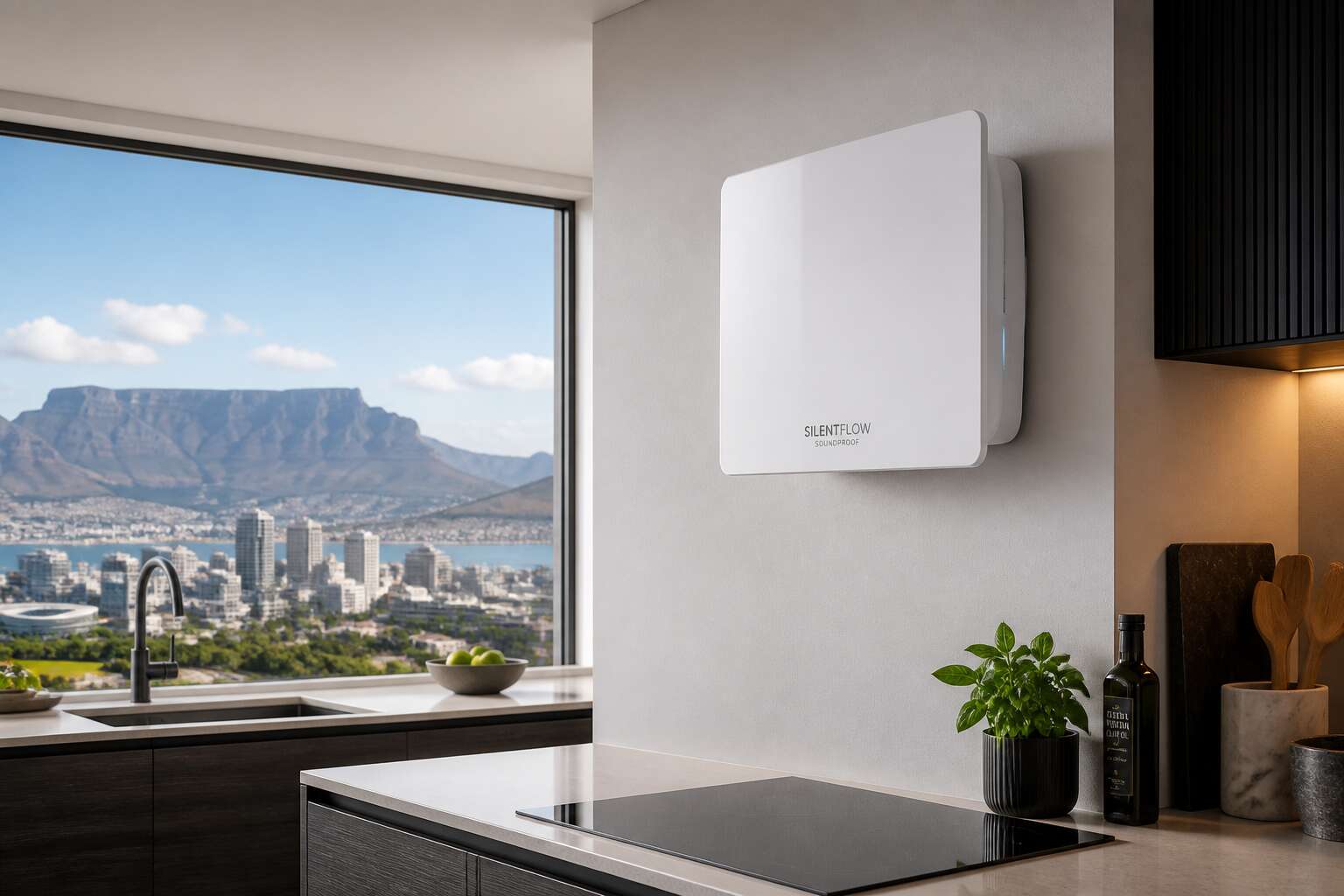
Why Extractor Fan Noise Matters in South African Homes
At night, the extractor fan wakes. Its hum seeps through the ceiling, through the plaster, through the bones of the house. In South African homes, where passageways are long and rooms are square, the noise does not dissipate. It bounces. It multiplies. The bedroom, meant for rest, becomes a chamber of low frequency dread.
What causes this torment?
- The motor, fixed too tightly to the frame, transferring vibration.
- The duct, too narrow, forcing the air to strain.
- The missing insulation, letting every rattle travel.
These are the flaws that break a household’s quiet. A soundproof extractor fan south africa addresses each one directly. It returns the night to silence.
Key Features to Look for in a Low-Noise Extractor Fan
Load shedding has left many of us in South Africa listening to appliances we never noticed before. The extractor fan becomes a persistent whisper, then a drone, then a source of quiet frustration. I’ve come to believe that silence is the true benchmark of comfort.
When you search for a soundproof extractor fan south africa, examine how the motor is mounted. A floating motor with anti vibration mounts absorbs energy that would otherwise travel through the walls. Pair that with a low decibel rating, ideally under 25 dB.
- Look for sealed bearings rather than bushings
- Check that the blade pitch is optimized for airflow
- Consider a fan with a thermal overload protector
Comparing Common Extractor Fan Types for Quiet Operation
Noise from a standard axial extractor fan easily exceeds 60 decibels. That is not a gentle background murmur; it is a mechanical buzz that cuts through conversation. In a South African home, where heat makes ventilation a daily necessity, the racket becomes a real nuisance. The fixture sits in your ceiling, but the sound fills the room below.
Axial fans push air straight through a propeller. They are inexpensive and common. Centrifugal fans, by contrast, use a drum shaped impeller. That design generates higher static pressure and, crucially, a softer acoustic profile.
- Axial: cheapest, loudest, best for short straight ducts.
- Centrifugal (inline): quieter, pricier, handles bends well.
- Mixed flow: middle ground in both noise and cost.
If you want a soundproof extractor fan south africa, the inline centrifugal type is the practical choice. The motor sits away from the ceiling grille, which isolates the vibration. Pair it with insulated ducting and the result is a gentle whoosh rather than a whine.
Installation Tips to Minimize Extractor Fan Sound
There is nothing quite like the quiet thrum of a well installed fan, but a shoddy setup can turn that hum into a nuisance. The truth is, the ductwork and mounting often create more noise than the motor itself. If you mount the unit rigidly against a wooden frame, the vibrations travel directly into the walls of your home.
For a truly quiet soundproof extractor fan south africa, the installation work matters as much as the motor.
– Use flexible ducting to absorb air turbulence.
– Fit anti-vibration rubber pads between the fan and the bracket.
– Position the unit away from light timber studs, which act like a drum.
A few minutes spent on these steps means the difference between a soft whisper and a distracting rattle. The best advice is to plan the route before you drill anything. Always leave a slight curve in the ducting to break the airflow pressure, then tighten everything properly. Your ears will thank you every single day.
The Cost and Value of Quiet Extraction Systems in South Africa
The initial price tag of a soundproof extractor fan south africa can feel like a small mortgage on a very tiny house. This sticker shock stops many homeowners before they even consider the long game. Value, however, is often a calculation of what remains after the installation, not just the immediate dent in your wallet.
When you factor in the alternative, running a rattling monstrosity that sounds like a constipated wildebeest at full tilt, the economics get interesting. Your ears are entirely in on this arrangement. A quiet system means a kitchen that works for you, not against your sanity. Here is what that silence actually buys:
– A higher resale value for your property, as buyers flinch at noisy renovations.
– Fewer arguments about who must endure the din while the braai is being prepared.
– The ability to whisper sweet nothings to your dinner guests without shouting.
Ultimately, the cost is a trade-off between your peace of mind and the acoustic nightmare you currently tolerate. Does it make sense to put a price on that? Well, your neighbours certainly hope you do.



0 Comments