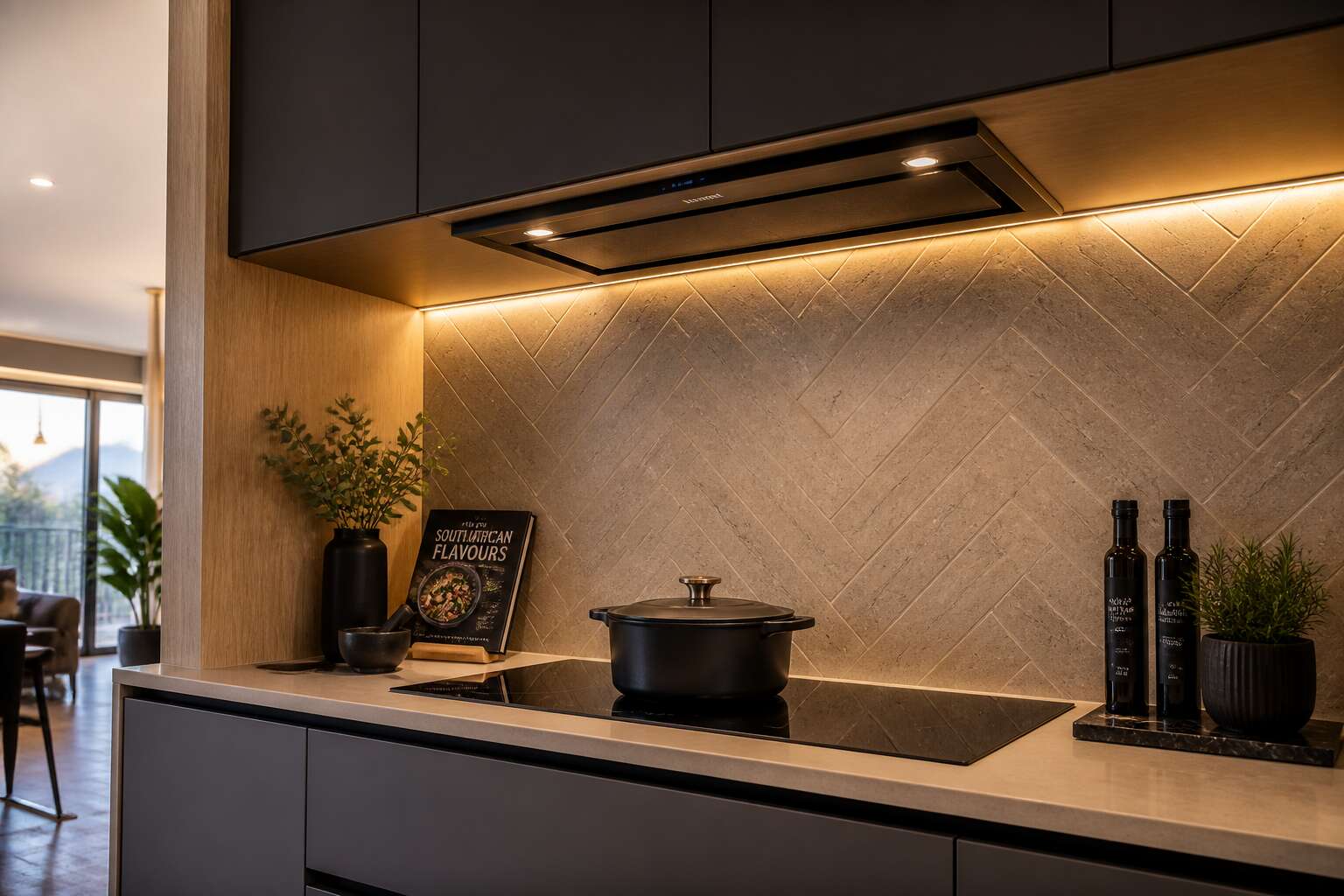
Why Choose a Built-In Extractor Fan for Your South African Kitchen
Maximising Space with Integrated Design
South African kitchens often contend with limited counter space and compact layouts. A built in kitchen extractor fan south africa offers a solution by disappearing into cabinetry, freeing valuable wall area. This integrated approach means the fan exists only when needed, preserving the visual flow of your kitchen.
Consider the practical benefits of this design choice. It keeps sightlines clear and reduces clutter, which matters when you are working with a smaller footprint. The motor sits out of view, which also muffles operational noise. For many homeowners, this balance of function and form is the deciding factor.
- Seamless installation within existing cabinet lines
- Direct ventilation through the ceiling or wall
- Less visual interference with your décor
When you opt for a built-in model, you are making a deliberate spatial decision. Every millimetre counts in urban apartments or traditional family homes. This is why a built in kitchen extractor fan south africa has become a practical staple for those who value both utility and design. I appreciate that kind of purposeful living.
Improved Indoor Air Quality in Coastal Climates
Summer humidity along South Africa’s coastline frequently exceeds 80%, leaving kitchen air thick with moisture. Steam from the pot meets airborne salt from the sea, and together they settle as a faint film across tiles and cupboard fronts.
A built in kitchen extractor fan south africa intercepts that humid, greasy air before condensation forms. The impact is tangible in Durban or Knysna, where coastal kitchens face relentless moisture. Less water in the air means less seeping into wood grain, metal hinges, and electrical fittings.
- Limits mould colonisation in hidden corners
- Reduces salt corrosion on appliance fittings
- Stops steam fogging windows and ceramic tiles
Extraction capacity matters in these conditions. A fan rated for coastal humidity handles what a basic model cannot, protecting both your airways and your cabinetry. The sea keeps its salt; your kitchen keeps its composure.
Aesthetic Appeal for Modern Home Interiors
South African kitchen design has shifted toward clean geometry and uninterrupted surfaces. A built in kitchen extractor fan south africa anchors this look by disappearing into the cabinetry, allowing timber and quartzite to carry the visual weight of the room.
A visible hood breaks the line of the kitchen. It introduces a second focal point that competes with the surrounding design. Removing that element changes the entire atmosphere. The extractor becomes a quiet mechanism rather than a decorative statement.
Cape Town designers are requesting custom fascia panels to match specific wood grains and laminate finishes. It preserves the rhythm of the kitchen.
- Hidden ventilation keeps sightlines clear across open-plan areas
- Matching panels allow the appliance to blend into cabinet fronts
- Retractable units remove visual clutter above the cooking surface
The built in kitchen extractor fan south africa market now offers models with interchangeable panels that align with contemporary palettes. Every surface remains intentional.
Energy Efficiency and Long-Term Cost Savings
Rising electricity tariffs in South Africa make every watt count. A built in kitchen extractor fan south africa that is engineered for efficiency can reduce energy consumption without sacrificing performance. The motor sits close to the cooking surface, so it requires less power to pull air through the ducting. LED lighting adds further savings, while variable speed controls let the fan match the cooking intensity. Over time, these small reductions accumulate. A household that cooks daily may see a meaningful drop in the monthly electricity bill.
The long term cost savings extend beyond energy. A well sealed integrated unit protects cabinetry from grease and moisture, which prevents premature wear. It also avoids the need for expensive decorative hoods. I have found that homeowners who choose this route recover the initial investment through lower running costs and reduced maintenance. The built in kitchen extractor fan south africa becomes a quiet financial ally in the kitchen.
Key Features to Look for in a Built-In Extractor Fan
Extraction Rate and Airflow Capacity
Most built-in extractor fans list only their peak extraction rate, yet daily cooking rarely hits that mark. In a South African kitchen, where open plan living mixes cooking with social spaces, the airflow capacity at lower speeds matters just as much. A built in kitchen extractor fan south africa should deliver strong movement without generating excessive noise.
Look for the cubic metres per hour rating at each gear setting. For instance, a 500 m3/h fan might drop to 200 m3/h on its quiet setting. That lower figure determines comfort during a slow Sunday stew. Also check the static pressure, usually measured in pascals. A higher value pushes air through longer ducts with fewer bends, which is essential in compact townhouses.
Noise Levels for Open-Plan Living
At 70 decibels, a built in kitchen extractor fan south africa can easily overpower normal conversation. In an open plan home, where the living area flows directly into the kitchen, that noise becomes part of every braai or family catch-up. Many buyers fixate on maximum extraction power, yet the lower speed settings are what they experience most.
The challenge, I have learned, is that sound travels differently through an open plan space. The decibel rating at each gear should be examined closely. A quality unit hovers around 35 to 45 dB on its quiet mode. At full power, 65 dB or lower is acceptable for short frying sessions. Some brands list sones instead of decibels, where one sone equals roughly 40 dB at one metre. Insulated motor housings and rubber mounts absorb vibration before it travels through the ceiling cavity. The right built in kitchen extractor fan south africa remains present without becoming a nuisance!
Filter Types and Maintenance Needs
Few things ruin a kitchen faster than a filter that collects dust instead of grease. A built in kitchen extractor fan south africa only performs as well as its filter. For serious cooking, choose stainless steel baffle filters. They capture grease without clogging like mesh filters do. Baffle filters also survive the dishwasher.
Charcoal filters handle odours, but they need replacement every few months. Clogged filters reduce airflow and strain the motor. That strain increases electricity bills and creates mechanical wear.
- Stainless steel baffle filters
- Aluminium mesh filters
- Carbon or charcoal filters
Check the filter release mechanism. Tool-free removal makes cleaning a two minute task. Grease buildup on the filter surface signals it is time for a wash. Your built in kitchen extractor fan south africa then runs efficiently with consistent extraction.
Ducted vs Recirculating Options
When selecting a built in kitchen extractor fan south africa, the most significant choice involves ducted versus recirculating configurations. Ducted units expel air outside, offering superior airflow for serious cooks. Recirculating systems filter air through charcoal and return it to the room, ideal for apartments or interior spaces where ducting is impossible. Static pressure matters more than cubic metres per hour. Static pressure determines how well the fan pushes air through long ducts. Consider:
- Duct run length; longer runs reduce performance
- Charcoal filter availability for recirculating models
- A backdraft shutter to prevent outside air intrusion
A wider duct outlet reduces resistance and noise. In my experience, your kitchen’s architecture often decides the answer. An exterior wall favours ducting, while an island layout leans toward recirculating. Your built in kitchen extractor fan south africa should match that physical reality. Choose the option that respects your space and cooking rhythm!
Local Regulations and Building Compliance in South Africa
SANS Standards and Electrical Safety Requirements
In South Africa, installing a built in kitchen extractor fan south africa involves more than picking the right airflow. The South African National Standards, specifically SANS 10142, govern all electrical installations. These regulations exist for a reason. A poorly wired extractor fan can create serious hazards, including fire risks and electrical shocks.
Your extractor fan must be installed by a certified electrician who understands local compliance requirements. This is not optional. Municipal inspectors and insurance providers increasingly verify SANS compliance before approving claims. When choosing a built in kitchen extractor fan south africa homeowners should remember a few key obligations:
- The electrical circuit must be protected by an earth leakage unit
- The isolator switch must be accessible near the appliance
- Wire sizes must match the fan’s rated current draw
Meeting these requirements protects your household and your property value. Ignoring them leaves you exposed, both legally and financially.
Ventilation Guidelines for Kitchen Installations
Local municipalities in South Africa require building plan approval for kitchen alterations, including extractor installation. The National Building Regulations, under SANS 10400, stipulate ventilation rates for kitchens. A built in kitchen extractor fan south africa must discharge to the outside, not into a ceiling space. This prevents moisture damage and mould. Some coastal municipalities enforce stricter salt corrosion rules for ducting materials.
Common ventilation guidelines include:
- Minimum extraction rate of 60 litres per second for kitchens.
- Ducting should be short and straight, with smooth internal surfaces.
- Backdraft flaps are mandatory where ducts exit through walls.
Failure to comply may result in occupancy certificates being withheld. Always verify local by-laws before committing to a specific built in kitchen extractor fan south africa model. The correct paperwork prevents future headaches with inspectors or buyers.
Working with Certified Installers and Certificate of Compliance
That paperwork becomes tangible the moment you engage a professional to handle the installation. The legal landscape for a built in kitchen extractor fan south africa carries weight beyond simple appliance choice. Municipal inspectors hold the power to reject work that fails compliance checks, and property transactions often hinge on proper documentation. A Certificate of Compliance serves as the definitive record that your installation meets SANS 10400 requirements and local by-laws.
Working with certified installers removes the guesswork. These professionals understand the specific regulations in your municipal area, whether that involves salt-resistant ducting near the coast or particular discharge requirements inland. They also manage the administrative trail that follows the physical installation, ensuring every form lands in the correct municipal office.
- Confirmation that ducting routes match the approved building plans.
- Verification that electrical work complies with wiring regulations.
- Submission of the necessary documentation to the local authority.
This documentation protects you at critical moments, from insurance claims to property resale. Choosing a certified installer for your built in kitchen extractor fan south africa is an investment in legal certainty.
Load Shedding and Inverter Compatibility Considerations
South Africa logged more than 6,000 hours of load shedding in 2023. Those interruptions now influence how municipalities assess kitchen ventilation. A built in kitchen extractor fan south africa must satisfy building compliance and withstand inverter-driven power realities.
Your approved building plans dictate duct routes, discharge points, and fan positioning. Straying from those plans creates friction during property transfers. Local by-laws vary widely, especially between coastal and inland municipalities.
Load shedding changes the compliance picture. Induction motors draw heavy surge current. Capacitor-run motors handle inverter supply more gracefully. Grid failures expose installations that were never designed for variable power.
These points matter during planning:
- Confirm the motor type matches your inverter’s surge capacity.
- Check municipal discharge regulations before placing ducts.
- Verify approved plans cover any inverter wiring additions.
Municipalities increasingly flag unauthorised electrical modifications. A built in kitchen extractor fan south africa that ticks all compliance boxes ties the extractor, inverter, and approved plans together cleanly.
Installation Considerations for Built-In Models
Measuring Your Kitchen Space and Cabinet Clearances
Before any built in kitchen extractor fan south africa can transform your cooking space, the physical dimensions of your kitchen demand scrutiny. Measure the width of the hob area first. A fan that is too narrow leaves steam and odours to escape. Cabinet clearances matter just as much. The unit needs clearance above and behind. I have seen installations fail because the ducting had no space to turn! Always compare the appliance dimensions against the actual cut-out size in your cabinetry.
When measuring, consider these points:
- The distance between the hob and the fan’s underside
- The depth of the surrounding cabinets
- The path from the fan to the external wall
Each millimetre counts. A built in kitchen extractor fan south africa that fits poorly will rattle or strain. Measuring twice before ordering prevents costly alterations later.
Ducting and External Venting Challenges
Installation exposes the gap between a product brochure and your kitchen walls. Ducting a built in kitchen extractor fan south africa through a double storey wall presents real constraints. The shortest route to the outside is rarely the easiest one. Roof trusses, wall plates and electrical conduits all occupy that space. Flexible ducting bends around obstacles, but every bend reduces airflow by roughly 10%. Rigid ducting performs better, yet demands precise alignment.
External louvres add another layer of complexity. A flapped vent keeps insects and rain out, but a stiff flap creates back pressure. Coastal winds can force these flaps fully shut. The fan then strains against a sealed outlet. Duct diameter matters equally. A 150mm duct moves air efficiently. A 125mm duct restricts flow; I have seen both installed in South African kitchens. A built in kitchen extractor fan south africa only performs as well as the ducting it connects to.
Wall Mounted vs Ceiling Integrated Designs
Wall mounted installations hide the built in kitchen extractor fan south africa inside a standard cabinet, which feels familiar. The wall supports the weight, so mounting is straightforward. Ceiling integrated designs free the wall entirely, but they demand a suspended ceiling or a deep cavity. Consider these differences.
- Wall mounted: controls and filters stay within arm’s reach
- Ceiling integrated: ducting runs horizontally, often longer
- Ceiling integrated: requires a structural plan for the motor’s vibration
I once watched a builder frame a bulkhead for a ceiling fan. The maintenance hatch was forgotten. Access matters as much as airflow. Wall mounted versions win for simplicity.
Hiring an Electrician vs DIY Installation
Many South African home insurance claims get rejected because an appliance was wired without a compliance certificate. That is the risk of treating a built in kitchen extractor fan south africa as a weekend project.
The electrical load looks simple, but the motor, ducting connections, and isolation switch all interact. An electrician understands SANS wiring standards and verifies the circuit before connecting anything.
Here is what a certified professional handles:
– Earthing and bonding checks
– Correct breaker rating selection
– The legally required Certificate of Compliance
DIY installation saves the callout fee. In my experience, that saving is the cheapest part. The liability sits with you for as long as the wiring stays in the wall. That signature on the COC carries real weight.
Homeowners may feel confident enough to run the cable and fit the switch. Few have tested the earth loop impedance. The built in kitchen extractor fan south africa demands electrical precision, not guesswork.
Common Installation Mistakes to Avoid
The physical placement of the unit does more work than most buyers realise. A duct path with fewer bends moves air faster. Every 90 degree turn adds resistance. Long runs struggle against that pressure.
A soffit mounted motor creates its own acoustic signature. That vibration travels through the cabinet frame. Most installers forget to line the contact surfaces with a rubber gasket. The result is a low frequency hum that has nothing to do with the fan blades.
- Mounting the unit too close to the hob, which lets heat damage the motor windings.
- Installing the duct on the wrong side of the bracket, leaving insufficient reach.
- Choosing an ultra compact model that physically cannot cover the required extraction area.
I notice these errors during routine inspections. Each one stems from rushing the measurement phase. The built in kitchen extractor fan south africa relies on alignment between the motor axis and the duct opening. When those two elements sit at an angle, airflow drops and the filters sneeze grease back onto the surface. An arm’s length installation avoids that friction entirely.
Top Brands and Models Available in South Africa
Local and Imported Brand Comparisons
South Africa’s appliance market splits neatly between local stalwarts and imported specialists, and that divide shapes every purchase decision. When you start comparing a built in kitchen extractor fan south africa, the real question is what you value more: service accessibility or cutting edge design.
Local brands like Defy and KIC dominate the budget and mid-range shelf space. Their units tolerate our voltage fluctuations, and replacement parts sit on the shelf at any major retailer. Imported names such as Faber, Elica, and Smeg offer sleeker profiles and noticeably better extraction performance, but servicing often requires a dedicated agent.
Here is what the trade-off looks like in practice:
– Local models: simple controls, robust build, easy parts access
– Imported models: quieter motors, premium stainless steel, stronger suction
The gap is closing quickly, thanks to local warranties on select imports. Still, the ideal built in kitchen extractor fan south africa for your home ultimately depends on your cooking frequency and counter space, not just the badge on the front!
Leading Models for Small Apartments and Compact Kitchens
Small apartments demand extractors that fit into tight cabinetry without sacrificing performance. The built in kitchen extractor fan south africa market offers several slimline options that slide neatly into upper cupboards above compact stoves. Defy’s 600mm canopy units remain a reliable choice for older apartment blocks, while KIC’s recessed models tuck flush against the cabinet base.
For imported alternatives, Faber’s prism series uses a compact footprint with a curved glass visor that suits contemporary studio kitchens. Elica’s box hoods bring a similar minimalist profile. These units deliver around 400 to 500 m³/h, enough for light to moderate cooking.
Consider these leading compact options:
- Defy Slimline 600mm canopy
- KIC recessed slide out models
- Faber prism series
- Elica box hoods
Each of these balances width, depth, and extraction power for tighter spaces. When shopping for any built in kitchen extractor fan south africa, the compact segment covers roughly 500mm to 900mm widths, so cabinet size remains the true deciding factor.
Premium Options for Large Family Kitchens
For large family kitchens, the built in kitchen extractor fan south africa market shifts toward substantial canopy widths and serious airflow. Premium brands such as BOSCH, Smeg and Siemens offer 90cm and 120cm units that keep pace with heavy cooking sessions. A family Sunday lunch with multiple pots on the stove produces plenty of steam and odour, so extraction rates above 700 m³/h make a real difference.
These larger models include features like sensor-based auto operation and dishwasher-safe baffle filters. The build quality also matters. A well-sealed housing prevents grease residue from settling inside your cabinetry.
Consider these leading options:
- BOSCH Series 8 pull-out canopy units
- Smeg linear Slim 90cm hoods
- Siemens iQ700 sensor models
Each delivers consistent performance for open-plan family spaces. A built in kitchen extractor fan south africa in this premium segment typically pairs a 90cm canopy with a motor rated for continuous use.
Where to Buy and Typical Price Ranges
Most South African homes sit between economy and premium when choosing a built in kitchen extractor fan south africa. Brands like Samsung, LG, Defy, and Russell Hobbs offer reliable integrated canopies with extraction rates from 550 to 700 m³/h. These handle daily cooking without the steep asking price of European flagships.
Retailers such as Builders Warehouse, Takealot, Hirsch’s, and appliance specialists across Gauteng and the Western Cape stock these units. Price bands shape the market:
1. Entry-level integrated fans from R1,800 to R3,500
2. Mid-range canopy units with stainless steel baffle filters from R3,500 to R7,000
3. High-end imported models with sensor controls from R12,000 upwards
The purchase price only covers the extractor itself. A built in kitchen extractor fan south africa often needs ducting materials, brackets, and a certified electrician for the final connection, adding R800 to R2,500. Some retailers now bundle installation within the quoted price, a factor that changes the final budget considerably.
Maintenance and Cleaning for Long-Lasting Performance
Cleaning Metal Mesh and Carbon Filters
A fan that works hard needs equal attention in return. The metal mesh filter is your first line of defense against grease and airborne particles. In a South African kitchen, where potjiekos and braaied meats are often on the menu, that mesh can clog up faster than you expect. You should wash it roughly every four weeks. Warm water and a degreasing agent will do the job. Let it dry completely before you slide it back in. A clogged mesh forces the motor to strain, which shortens the lifespan of your built in kitchen extractor fan south africa.
Carbon filters are a different matter entirely. They are designed for recirculating setups, where they remove odours instead of venting them outside. You cannot wash a carbon filter. Once it is saturated, and it will be after three to six months, you have to replace it. Running a fan with a spent carbon filter is just moving stale air around. The cost of a new filter is small compared to the cost of a new motor, so it is a poor place to cut corners.
Preventing Grease Build-Up in Ducting
A fan’s ducting carries the real weight of your kitchen’s exhaust, yet it is the component most often ignored. In South African homes, where high-heat cooking is standard, grease molecules travel through the duct and cling to the interior surfaces. Over time, this film hardens into a stubborn residue. This build-up is not just unsanitary; it creates a fire hazard that many homeowners overlook.
The risk increases with the length of your duct run. A short, straight duct is easier to keep clear, but a long run with multiple bends gives grease more surface area to accumulate on. If your built in kitchen extractor fan south africa recirculates air, you may think ducting is irrelevant. That is a misconception. Even recirculating units have an internal duct path and outlet vent that can collect a significant amount of oily residue.
Look for the signs that your ducting is in trouble:
– A noticeable decrease in airflow strength
– Lingering cooking odours despite the fan operating
– Visible grease streaks near the vent cap on an exterior wall
– A faint, oily smell emanating from the vents when the fan is off
Ignoring these signals forces the motor to work harder to push stale air through a narrowed passage. This extra strain accelerates wear and tear. The professional standard is to have ducting inspected and professionally cleaned every couple of years. Between those appointments, you can mitigate the problem by ensuring your mesh filter is always properly seated, as any gap allows grease to bypass the filter and head straight for the duct walls. A well maintained duct system keeps your built in kitchen extractor fan south africa performing at its optimum for years, saving you from early replacement costs.
Replacing Odour Filters on a Schedule
An odour filter works silently until the moment it fails. In a built in kitchen extractor fan south africa, this filter is the last line of defence against lingering cooking smells. Replacing it on a schedule keeps your kitchen honest.
Set a recurring reminder every four months. South African kitchens see intense frying and braaing, which saturate odour filters faster than expected. Trust your nose. If cooking aromas persist after the fan stops, replace the filter immediately.
- Smells return within minutes of cooking
- The fan sounds strained despite a clean mesh filter
- The filter looks darker than when installed
A regular replacement cadence protects the motor from overwork and keeps the system reliable for years. I have replaced filters late myself, and the difference is immediate.
Routine Checks and Care After Load Shedding
Load shedding disrupts more than dinner. When the grid returns, the voltage surge can stress the motor of a built in kitchen extractor fan south africa in ways that surface weeks later. A short routine after each outage protects the system.
Wait two minutes before switching the fan on after power returns. Listen for grinding or hesitation during the first minute of operation. Check that the control responds without delay.
- Inspect the plug point and wiring for scorch marks
- Run the fan for five minutes to confirm steady airflow
- Wipe the outer housing to remove dust settled during the blackout
These movements take less time than the outage itself. A built in kitchen extractor fan south africa pushes heat and grease through the same ducts every day. Regular checks after load shedding turn a moment of frustration into a habit of care, catching small faults before they become expensive failures.


0 Comments