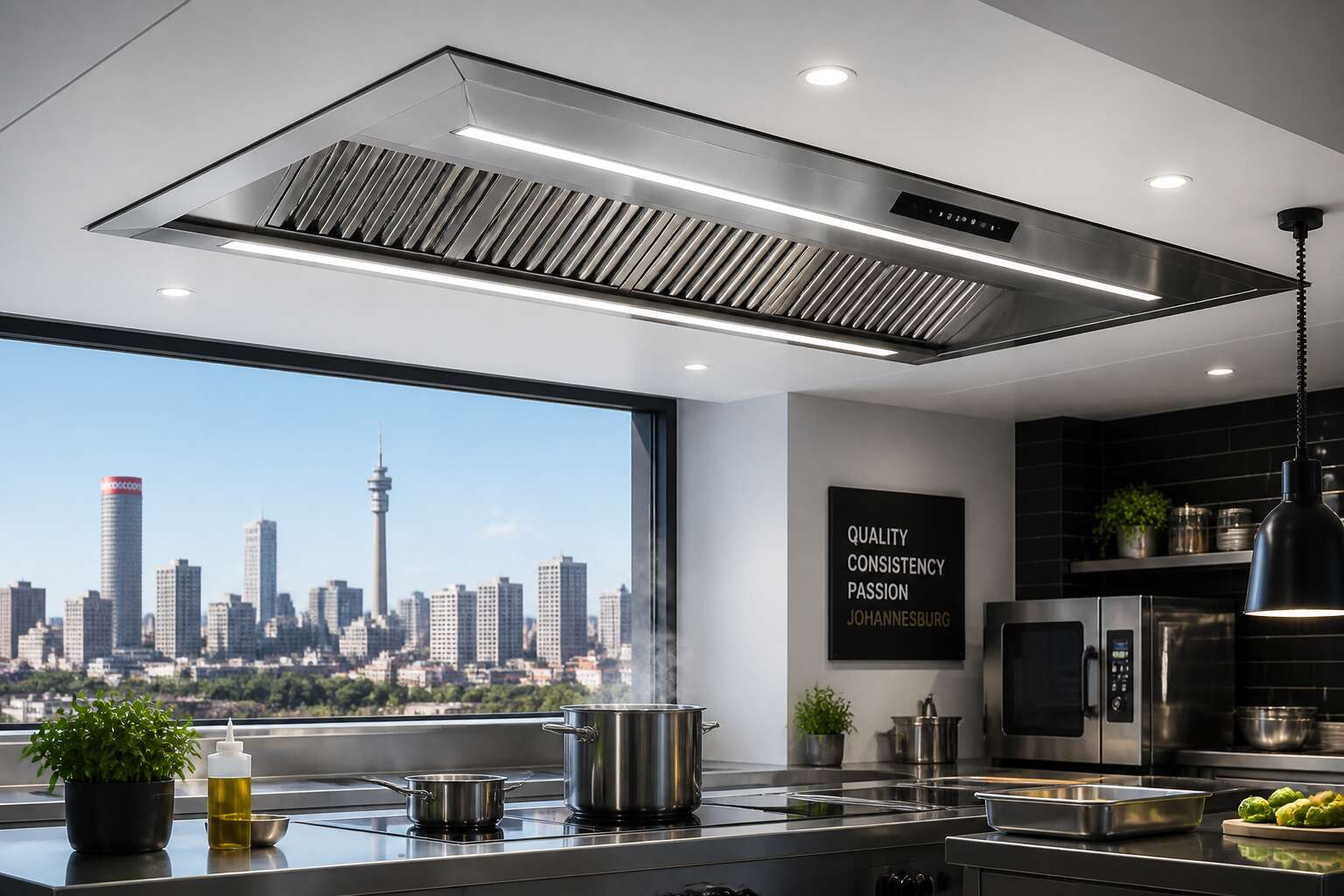
Assessing Your Extractor Fan Requirements
Factors to Consider for Your Space
When I stand in a kitchen or bathroom, I calculate the air that needs to move. The volume of the room, measured in cubic metres, sets the baseline. A space with high ceilings or an open-plan layout demands more power. The extractor fan suppliers johannesburg I consult always remind me to factor in the ducting route; every bend reduces efficiency.
Consider the humidity source. A steamy shower produces far more moisture than a modest hob. Then there is the question of noise. A fan that rumbles aggressively becomes a presence you cannot ignore. The best approach involves matching the extraction rate to your specific circumstances, not simply choosing the largest model.
- Room volume in cubic metres
- Ducting length and number of bends
- Primary moisture source
- Acceptable noise level
These details matter more than brand names. When you understand them, you can speak clearly with any extractor fan suppliers johannesburg and receive a solution that actually fits your home.
Calculating Airflow and Ventilation Needs
Air movement obeys physics, not wishful thinking. A room’s volume multiplied by the required air changes per hour gives your baseline extraction rate. For a bathroom, that usually means six to eight changes hourly. Kitchens often need double that. I always measure from the fan’s position to the exterior wall, because every metre of ducting adds resistance.
Calculating ventilation needs also means accounting for the fan’s static pressure. This figure tells you how much resistance the motor can overcome. The sequence I follow when assessing a space is simple:
- Measure the room volume and apply the air change rate.
- Add resistance for every bend and metre of ducting.
- Confirm the fan’s pressure rating exceeds that total.
The extractor fan suppliers johannesburg I work with provide performance curves, not just wattage ratings. Comparing those curves against your measured requirements separates a capable system from a decorative one.
Identifying the Right Type of Extractor Fan
Assessing your extractor fan requirements starts with auditing the room’s existing airflow paths. A window or door gap alters how effectively any fan performs. I have seen spaces where extractor fan suppliers johannesburg recommended a powerful unit, yet the room had no make-up air source. The fan struggled against negative pressure. That is a physics problem, not a product problem.
Identifying the right type of extractor fan depends on the mounting surface and the duct route. Axial fans move high volumes at low pressure. Centrifugal fans handle duct resistance. Mixed flow models balance both. The suppliers I consult in Johannesburg always ask about the installation angle before suggesting a model. Ceiling units behave differently from wall mounted ones, and a fan that works in a standard suburban kitchen may fail in a loft conversion or basement flat.
Understanding Noise Levels and Energy Efficiency
Assessing your extractor fan requirements goes beyond airflow charts. The noise profile and energy appetite of a unit determine whether it becomes a trusted helper or a costly nuisance. I have listened to fans that move air well but vibrate through the ceiling at night. A low sone rating matters more than the decibel number, because sones reflect how the human ear perceives sound. When speaking to extractor fan suppliers johannesburg, ask for the sound pressure level at your specific duty point.
Energy efficiency follows a similar path. A motor that spins faster draws more current and generates more heat. Seek out models with low wattage and good insulation. Consider units with humidity or motion sensors, as they reduce runtime. These features lower your electricity bill while keeping the room comfortable. In my experience, the quietest fans are also the most efficient, because they encourage longer operation and better ventilation.
What to Look for in a Reliable Supplier
Local Expertise and Industry Experience
Local expertise is not a marketing label. It is a working knowledge of Johannesburg’s particular climate and infrastructure. The highveld altitude reduces air density, which changes fan performance curves. A supplier who has installed units in the city’s dense industrial areas understands these adjustments without needing a manual. They have seen the effects of power surges in older suburbs and the fine dust from mining activities.
Industry experience reveals itself through the questions they ask. The most reliable extractor fan suppliers johannesburg will probe your operational hours, duct condition, and maintenance routines. They have encountered every failure mode, from grease buildup to corroded bearings. When evaluating a candidate, look for these concrete signs:
- References from factories in your industry
- A local spare parts inventory
- Willingness to perform an on site assessment
Product Range and Quality Brands
The product range a supplier stocks tells you more than their catalogue. It reveals who they trust and how they handle warranty claims. Quality brands earn their reputation through consistent performance. A supplier who carries those names has decided the risk is worth it. When you evaluate extractor fan suppliers johannesburg, examine their shelves.
What belongs on those shelves?
- Motors rated for continuous industrial duty
- Impellers that resist corrosion and dust abrasion
- Controls that match local electrical conditions
In my years of specifying ventilation, I have watched good fans fail from poor installation while modest units outlasted premium names. The difference is often the supplier’s knowledge. A curated range indicates someone who can match a fan to your air volume and pressure requirements. They should also stock spare parts alongside complete units. When a fan fails on a Friday afternoon, you need a bearing or capacitor delivered from a local shelf, not a container ship.
After-Sales Support and Warranties
When a fan quits, the cost of downtime often exceeds the fan’s price. That is why after-sales support separates competent extractor fan suppliers johannesburg from the rest. You want a supplier who answers the phone, not an email auto-reply. Ask how quickly they dispatch technicians or replacement parts.
Warranties reveal confidence. A two-year warranty on a motor rated for continuous duty is poor. Five years with clear terms is better. Read the exclusions. Some suppliers void claims for dust exposure, which defeats the purpose in industrial settings.
- Response time for breakdowns
- Stock levels of spare parts locally
- Repair versus replacement policies
- Alignment with the original equipment manufacturer
These details matter more than the fan’s price tag. A warranty is only as useful as the person who honours it.
Customisation and Installation Services
Customisation separates a working ventilation system from a box of mismatched parts. Johannesburg factories and commercial kitchens rarely fit standard dimensions. A reliable supplier measures the actual constraints, then adapts the fan housing, motor placement, or control system to match. This demands engineers who understand duct design, not salespeople pushing catalogue models.
Installation is where precision matters most. Poor mounting breeds vibration, noise, and premature bearing failure. Ask whether the supplier’s own team handles electrical connections, duct sealing, and structural supports. For example:
- Roof installations require weatherproofing and flashings
- Wall units need core drilling and framing reinforcement
- Ducted systems demand tension calculations and bracing
The strongest extractor fan suppliers johannesburg offer commissioning visits. They balance the impeller, test airflow rates, and document performance readings. You get a system that works from the first switch-on, not a project that lingers unfinished.
Pricing and Transparent Quotes
Pricing in ventilation is rarely a single figure. A quote from extractor fan suppliers johannesburg might list the unit cost, then leave installation, ducting, and electrical work as a surprise. That approach creates budget disputes later. A reliable supplier provides an itemised breakdown, covering every component and labour hour with clarity.
Look for quotes that specify the make and model, the motor size, the control system, and the exact scope of work. If a line item says “miscellaneous”, ask for detail! Transparent suppliers also mention potential variables, such as roof access constraints or structural reinforcement, before they become extra charges.
- Equipment costs with brand names and model numbers
- Delivery, installation, and commissioning fees
- Any electrical or structural modifications
When comparing extractor fan suppliers johannesburg, request the same scope from each one. Only then can you weigh pricing fairly. A transparent quote reflects confidence; a vague one indicates risk.
Navigating the Johannesburg Market
Key Districts and Industrial Hubs
Johannesburg is a city of sprawling industrial corridors. For commercial kitchens and manufacturing facilities, the geography of your supplier matters as much as the equipment itself. City Deep and Crown Mines form the industrial backbone of the south, where extraction specialists cluster beside wholesale distributors. Wynberg and Linbro Park in the north host a different breed of operation, often focused on bespoke installations. Midrand positions itself between the two, with quick access to the N1.
When I scout extractor fan suppliers johannesburg, proximity to the client site ranks high. A supplier located near your facility simplifies logistics, reduces transport costs, and speeds up emergency replacements.
- City Deep: dense with heavy equipment dealers
- Wynberg: strong for spare parts and accessories
- Midrand: balanced showrooms and warehouses
The right supplier is the one embedded within your district’s supply chain. Their distribution networks, knowledge of municipal regulations, and relationships with nearby electricians all depend on location. That geographical insight often proves as valuable as the fan itself.
Availability of Spare Parts and Accessories
Spare parts dictate whether a commercial kitchen keeps running or shuts down. Across the Johannesburg market, the availability of fan blades, drive belts, bearings, and filters differs sharply between suppliers. Extractor fan suppliers johannesburg that carry genuine components for the brands they sell remain the exception. Most order replacements on request, which extends downtime. The businesses that keep motor spares, capacitors, and fasteners in physical stock help clients avoid days of lost production. Speed controllers and wall-mounted switches seem small, but a failed capacitor can pull an entire exhaust system offline. When assessing a supplier, ask exactly which parts are held locally versus shipped from abroad. That answer reveals how quickly they can restore your airflow.
Compliance with Local Building Regulations
Johannesburg’s building regulations are not a suggestion, they are a binding contract between your business and the municipality. Extractor fan suppliers johannesburg who grasp the local bylaws can prevent expensive retrofits. The National Building Regulations set baseline standards, but the City of Johannesburg enforces its own interpretation, particularly around fire safety and exhaust discharge.
Consider the scenario where an inspector finds ductwork that misses the fire rating minimum. The system gets tagged, the kitchen stops, and the correction costs more than the original unit. A supplier with local compliance experience flags these issues before installation, not after.
- Fire rated ducting and intumescent seals
- Grease extraction and filtration compliance
- Correct discharge points for exhaust air
These details determine whether your installation passes or fails. The right extractor fan suppliers johannesburg carry the necessary documentation and understand the approval process, which means your kitchen opens on schedule.
Installation, Maintenance, and Energy Efficiency
Professional Installation Best Practices
Johannesburg’s industrial and commercial sectors consume nearly 40% of the city’s electricity, yet much of that power is wasted on poorly maintained ventilation systems. A fan that struggles against dust and grime works harder, draws more current, and pushes your utility bill higher every single month. The real work begins after the unit arrives on site.
Proper installation determines whether that expensive equipment delivers its rated performance. A unit mounted with inadequate clearance recirculates stale air instead of exhausting it. Installers must verify ductwork integrity before powering the system. Leaky joints undermine airflow and force the motor to overcompensate.
1. Confirm the mounting surface can bear the unit’s weight.
2. Seal all duct connections with appropriate mastic or foil tape.
3. Test the airflow direction before securing the unit permanently.
4. Check for vibration after the first hour of operation.
Maintenance follows a simple rhythm. Clean the blades and housing every quarter, more often in dusty environments like foundries or bakeries. Replace worn belts before they snap, not after. Lubricate bearings according to the manufacturer’s schedule. These small actions prevent costly breakdowns and keep the fan running at peak efficiency.
Energy efficiency comes from matching the fan speed to the actual demand. Variable speed drives allow you to dial back the airflow during off peak hours. This approach cuts consumption dramatically compared to running a fixed speed unit all day. Extractor fan suppliers johannesburg often recommend this setup for facilities that operate in cycles, and the savings usually justify the higher upfront cost within eighteen months.
Routine Maintenance for Longevity
Neglect follows a predictable course. A fan left without attention begins its decline long before the first alarming noise. The motor’s hum deepens. The bearings dry to a faint, gritty whisper. Extractor fan suppliers johannesburg witness this pattern constantly; they see the aftermath of forgotten maintenance schedules.
The unit that survives decades does so through deliberate observation. Listen for changes in pitch. Feel for heat radiating from the housing. Monitor current draw for unexplained spikes. I have walked through plant rooms where these quiet rituals were followed religiously; the machinery there runs smoother than anything newly installed.
Regular service extends life beyond expectation. A clean install, a disciplined eye, and scheduled attention keep the fan performing past its rated years. When facilities work with reliable extractor fan suppliers johannesburg, the maintenance rhythm becomes a safeguard. The cost of neglect arrives eventually.
Energy-Saving Features and Technologies
Modern extractor fans have changed more than their housings suggest. The technology inside them now determines the operating cost as much as the airflow they move. Electronically commutated motors, or EC motors, convert power with far greater efficiency than older AC equivalents. They run cooler, last longer, and shave meaningful figures off a facility’s monthly energy bill. For anyone sourcing from extractor fan suppliers johannesburg, this is the first question worth asking.
Some technologies deliver savings without any operator input:
- Variable speed drives that adjust fan output to match real‑time demand, rather than running flat out.
- Demand‑based controls triggered by occupancy sensors or carbon dioxide monitors.
- Heat recovery cores that capture warmth from exhaust air and transfer it to incoming fresh air.
Smart controls take this further. Instead of a fan that runs on a timer, imagine one that learns the building’s daily rhythm. It slows during lunch breaks, accelerates before the morning shift arrives, and monitors its own current draw for signs of wear. These systems communicate with facility management platforms, so a spike in consumption becomes an alert, not a surprise in next month’s invoice.
The payback period is the real measure. A fan with premium motors and controls may cost more upfront, but the annual savings in electricity, especially under South African tariffs, often recovers that difference within two years. Extractor fan suppliers johannesburg increasingly stock these models because industrial clients ask for them by name. The technology is no longer exotic; it is simply the sensible option.
Troubleshooting Common Issues
An extractor fan that sounds like a small animal in distress is not a rite of passage. It is a signal. Loose ducting after a shoddy installation, or a filter that hasn’t met a soapy bucket in months, cause most failures. Start with the cheap fixes.
Check the damper flap. A stuck flap reduces airflow and invites outdoor heat. Clean the blades and housing. Dirty blades unbalance the motor and inflate your consumption. Tighten the mounting bracket. Vibration is friction wearing the motor.
If the fan runs but moves no air, test the duct for blockages. If it hums and doesn’t spin, inspect the capacitor. When these fail, the fan draws current without turning, which shows up on the meter. For persistent inefficiency, call your extractor fan suppliers johannesburg. They know the local culprits.
Making Your Final Decision
Comparing Supplier Quotes
When you line up quotes from extractor fan suppliers johannesburg, the cheapest figure rarely wins the race. I have seen price gaps of 40% for identical specifications, yet the difference lies in what the quote actually covers. Labour, ducting, and vibration mounts often appear as add-ons later, so scrutinise each line item.
Ask every supplier to break down their pricing into equipment, delivery, and installation. That clarity lets you compare apples to apples. A slightly higher quote might include a longer warranty or a more robust fan unit.
- Confirm the exact model and brand quoted.
- Check if the quote includes electrical connections.
- Verify the warranty terms in writing.
Trust your judgement about responsiveness too. A supplier who answers questions quickly tends to handle after-sales issues with the same urgency.
Reading Reviews and Testimonials
When you finally narrow your list of extractor fan suppliers johannesburg to two finalists, the real detective work begins. The brochures all look shiny, and every salesperson has a firm handshake. I have seen clients choose based on a website’s colour scheme, only to regret it when the fan sounds like a dying warthog. So, where do you find the truth? You read the reviews, but you read them with a sceptical eye.
Look for patterns rather than individual gripes. One complaint about a late delivery might be a fluke. Five complaints about the same faulty control switch tells you something different. For extractor fan suppliers johannesburg, the best testimony is often the boring, mundane detail. A reviewer who mentions a specific technician by name, or describes the exact model installed, usually had a real experience.
– Check Google Business profiles for responses to negative feedback.
– Browse industry forums where facility managers complain freely.
– Ask the supplier for references from projects similar to your own.
A testimonial that sounds like a marketing intern wrote it probably was. Scrutinise the language. Real users mention the noise level at 3am, not the company’s “commitment to excellence.” The optimal supplier will have a few grumbles, because no business pleases everyone. The optimal supplier also answers those grumbles publicly instead of hiding them. This final check protects your budget from a costly guess. Trust the pattern, and trust your gut about the people behind the quotes. That is how you separate a vendor from a partner, and frankly, that is how you sleep well after installation day.
Verifying Credentials and Certifications
Before you sign anything, verify the paper trail. A supplier can promise the world, but the credentials tell you whether they can deliver. When comparing extractor fan suppliers johannesburg, look for certifications that align with ventilation industry standards. Check if their technicians hold valid electrical or mechanical qualifications. Ask about their health and safety compliance records. From my experience, a legitimate supplier will produce these documents without hesitation. If they deflect or offer excuses, that is your answer.
The process is not about mistrust. It is about protecting your investment. A certified supplier follows consistent installation practices and uses tested components, which reduces the chance of failures down the line. The checks themselves are straightforward.
- Confirm their registration with relevant industry bodies.
- Request proof of insurance and liability coverage.
- Verify any manufacturer certifications they claim to hold.
These checks take an afternoon. A poor decision takes much longer to fix.
Choosing Between New and Refurbished Units
Choosing between new and refurbished units is where buyers often develop a sudden interest in philosophy. The refurbished unit costs less. The new unit costs more. Both require the same amount of electricity to spin a blade. When I speak with extractor fan suppliers johannesburg, I ask about the refurbishment process. Who did the rebuild? What parts were replaced? If the supplier shrugs and says “we fixed it,” that is not a refurbishment. That is a decision made without data.
Consider the warranty situation before you decide.
- Refurbished units may carry a shorter warranty.
- New units typically include manufacturer coverage.
- Your risk tolerance should match the supplier’s transparency.
A reputable extractor fan suppliers johannesburg will offer honest guidance on both options. The decision ultimately comes down to how much uncertainty your budget can absorb.




0 Comments