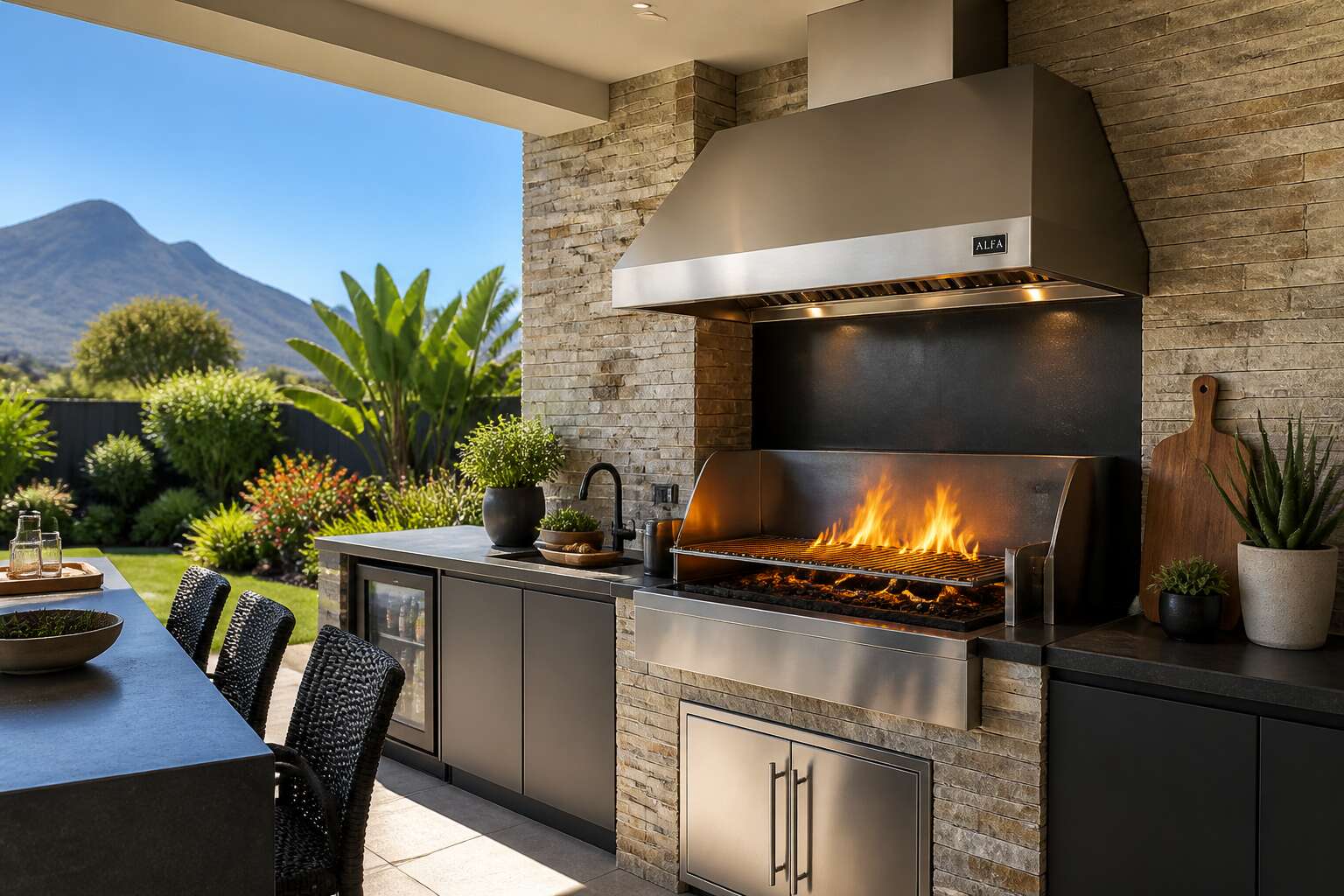
Understanding the Need for Smoke Extraction in Braai Areas
Why Braai Smoke is a Problem
Braai smoke has a way of settling into everything it touches. That rich, woody aroma which delights the senses outdoors turns invasive the moment it drifts indoors. It clings to curtains, seeps into upholstery, and lingers in the very fibres of your home. For South African families who braai often, this is not a small nuisance. It is a constant battle with invisible residue.
The problems compound quickly:
- Smoke stains walls and ceilings with stubborn yellow film
- Lingering odours find their way into clothing and bedding
- Eye and chest irritation occurs in poorly ventilated rooms
An effective built in braai extractor fan south africa residents rely on captures this smoke at the source. It draws the particles away before they infiltrate your living spaces. The distinction between a pleasant evening and a smoky house lies in the extraction. Proper ventilation transforms the braai experience from a chore of cleaning into a pure enjoyment of flame and food.
Indoor vs Outdoor Braai Spaces
Outside, braai smoke is a guest. Inside, it is a squatter that refuses to pay rent. In South Africa, we love the open flame, but our covered patios and indoor braai rooms create a very different airflow challenge than an open veld.
Outdoor spaces let the wind carry aromas away. Semi-enclosed areas trap heat, fat particles, and carbon compounds. This is where the real problem begins:
– Low hanging smoke hovers at breathing level
– Grease aerosols coat glass and steel surfaces
– Air stagnates without a natural pressure differential
An indoor braai without mechanical ventilation becomes a smoke chamber. This is precisely why a built in braai extractor fan south africa is considered essential for any serious entertainer. It creates a controlled exhaust pathway that matches the high heat output of a real fire.
Effects on Interior Finishes and Fabrics
Braai smoke is not merely a smell; it is an aerosol of condensed organic compounds and fine soot particles that settle onto every surface it touches. Over a single cooking season, that film bakes into a stubborn, yellowed varnish on paintwork and turns white ceilings into a map of brown streaks. Curtains and couches absorb the pungent odour into their very fibres, and once that happens, no amount of airing will pull it out.
When you cook with wood or charcoal, the particulate load is heavier than most people expect. The damage shows up in stages:
– Sticky residues on tiled walls and window glass
– Discoloration on sheer and synthetic fabrics
– Musty, rancid smells in cushions and upholstery
Without a controlled exhaust system, the soot also oxidises metal trims and corrodes electronic components nearby. For any home entertainer, protecting these finishes is the practical reason to invest in a built in braai extractor fan south africa before the layers of grime become a renovation project.
Key Features to Look for in an Extractor Unit
Airflow Capacity and Extraction Rate
Airflow capacity separates a functional built in braai extractor fan south africa from a decorative one. This rating, expressed in cubic metres per hour, tells you how much smoke the unit can displace from the room in real time. A modest 600 m³/h unit may handle a compact braai nook; an open plan area with high ceilings demands 1200 m³/h or more. The extraction rate matters just as much. It reflects how quickly the motor reaches full pull, so look for a unit that ramps up fast rather than hesitating.
For any built in braai extractor fan south africa, static pressure deserves equal attention. That specification, often overlooked, shows how the fan performs when ducting bends and filters add resistance. I have tested units with impressive free air volumes that dropped once connected to a chimney! Always verify the pressure curve alongside the peak number.
Noise Levels and Design
Noise levels often reveal more about a built in braai extractor fan south africa than raw power ratings. A unit claiming high cubic metres per hour is worthless if the motor whines under load. Sone ratings below three at normal speed keep conversation intact. Design influences this through baffle geometry and intake angles; sharper edges create whistling, rounded vents smooth airflow.
Consider the physical integration. Flush mounts hide ducting but expose vibrational transfer. Braced stainless steel absorbs resonance, while thermal breaks prevent cold bridging. Service access matters: a motor that requires wall demolition is a design flaw.
- Variable speed fans with silent mode
- Removable filters that survive dishwashers
- Warm LED lighting for braai ambience
These choices shape long term satisfaction, not just initial aesthetics.
Filter Systems and Maintenance
Every built in braai extractor fan south africa depends on its filter. These panels collect airborne fat, yet buyers ignore them until a rancid odour invades the home. I have watched owners lose patience with a clogged mesh that was never designed for easy cleaning. Check the filter’s material and geometry!
- Removable without tools
- Dishwasher safe or compatible with common degreasers
- Visible wear indicators
Maintenance is a matter of honesty. If you cannot access the filter from the front, you will avoid the task. A filter that takes minutes to rinse becomes part of your routine. One that demands disassembly creates resentment, and that resentment turns into neglect.
Installation Requirements
The average South African family braais 48 times a year, yet the installation of the extraction unit is often an afterthought. The physical placement of a built in braai extractor fan south africa determines its entire lifespan and safety profile. This is not a decorative appliance; it is a mechanical system that must obey the laws of airflow and gravity.
The installation requirements are simple, but unforgiving. The unit requires a dedicated electrical circuit, one that is not shared with the kettle or the toaster. The ducting must be rigid and short, using smooth metal piping rather than flexible hose that traps grease and restricts the motor’s breath.
Consider the following specifications before the builder seals the cavity:
1. A minimum clearance of 50 mm between the motor housing and any combustible material.
2. A rain cap with a mesh guard on the exterior vent to prevent bird nesting and downdraughts.
3. A slope of at least 15 degrees on the horizontal duct run to drain condensation away from the motor.
4. An accessible isolation switch outside the braai area for emergency shutoff.
The material of the unit matters as much as the electrical work. A stainless steel housing resists the corrosion of coastal salt and the acidic smoke of a wood fire. Look for a built in braai extractor fan south africa with a motor rated for continuous duty, not intermittent cycles. The wiring should be heat resistant, rated to at least 90 degrees Celsius, because the air around the braai is never cool.
Insulated ducting is another consideration often missed during installation. The temperature difference between the hot extract and the cold roof cavity causes condensation inside the pipe. That moisture drips back into the motor, corroding the bearings from within. Insulation also muffles the rumble of the fan, keeping the conversation around the fire intimate rather than shouted.
Installation is not the time to economise on brackets or fixings. Vibration is the silent killer of extractor fans, loosening screws and rattling panels loose over time. Use heavy duty rubber mounts between the fan and the wall. The unit should sit level, checked with a spirit level, because a tilt of even two degrees sends grease pooling toward the motor housing.
The key to longevity is not the brand name, but the sum of these details. A well installed unit hums softly, performs invisibly, and asks for attention only when the filter needs a rinse. When these requirements are met, the built in braai extractor fan south africa becomes a permanent part of the home, as reliable as the chimney that used to carry the smoke away.
Control Options and Smart Features
A braai without smoke is only possible when you control the air itself, not just the fire. The controls on your built in braai extractor fan south africa are the difference between a tool and a toy. A basic toggle switch is obsolete. Look for a variable speed controller that lets you dial in the exact extraction rate for the size of your fire, ensuring you pull smoke without sucking the heat out of the coals.
Smart features are no longer a gimmick. A remote control is a practical necessity when your hands are covered in marinade and ash. Consider a unit with a timer function that purges lingering smoke for fifteen minutes after you have finished braaing. Modern units offer thermostatic sensors that automatically boost the fan speed when a blast of heat or smoke hits the filter. That response rate protects your indoor braai area without you having to monitor it.
The motor is the heart, and the switch is the brain of the system. A soft start motor prevents the initial electrical surge that wears down components. The interface should offer clear feedback, such as lights or a digital display, so you know the system is working. Look for these specific features to ensure you are not just buying a motor with a cover:
– Capacitor start and run motors for high torque on demand.
– Ball bearings instead of sleeve bearings for longer service life.
– A controller that isolates the motor from the power source to prevent hum.
– Replaceable control boards for easy service, rather than replacing the entire unit.
On the high end, app control and Wi-Fi connectivity are entering the market. This allows you to switch on the fan from the kitchen before you even carry the meat outside. It is a convenience, but a useful one. The goal is that the built in braai extractor fan south africa works as an extension of your will, reacting and exhausting without you having to think about the mechanics.
Popular Types and Configurations for Local Homes
Ceiling-Mounted Options
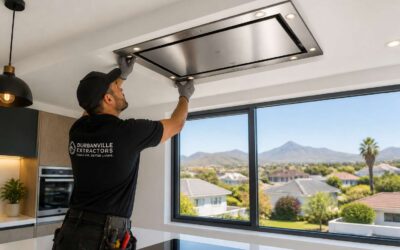
Most smoke never reaches the ceiling. It pools at head height first, which makes ceiling mounted extraction a clever countermeasure. The motor hides within the roof cavity, leaving only a discreet grille visible. Some configurations use a linear slot near the chimney breast; others employ a central ceiling panel that draws smoke upward before it spreads.
For local homes, common configurations include:
- Single point extraction directly above the firebox
- Linear slot diffusers aligned with the rafters
- Multi point systems for L shaped kitchen braais
Each arrangement changes how the smoke travels. The ceiling mounted option suits double volume spaces well, and remains a popular choice when searching for a built in braai extractor fan south africa because of its visual restraint.
Wall-Mounted Units
Wall mounted units suit the classic South African braai room, where the firebox is built into a solid wall. The canopy sits above the grill and draws smoke sideways rather than chasing it through the roof cavity, which matters in homes with low pitched ceilings or limited attic space. The duct path depends on the structure, but the capture zone stays close to the fire, so the built in braai extractor fan south africa works with a shorter distance for smoke to travel.
Common wall mounted configurations include:
- A rectangular canopy sized to the full cooking surface, ideal for built in braai units.
- A pivoting extractor arm for fireboxes placed near windows or sliding doors.
- A vertical slot mounted on the chimney breast, which suits narrow braai alcoves.
The wall mounted option gives you direct access to the controls and the filter housing, and it tends to feel more integrated with the masonry around the firebox.
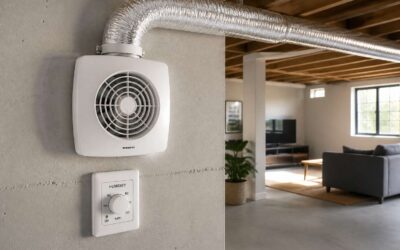
Inline Extractor Fans
One of the quieter decisions in a braai room build is where the motor actually lives. For homes where the firebox sits in an internal wall, an inline extractor fan changes the approach entirely. Instead of a canopy housing the motor, the fan unit is placed higher up, typically in the ceiling void or roof truss area. This leaves the visible built in braai extractor fan south africa components cleaner and simpler, with only the ducting and a discreet ceiling grille visible from below.
The real advantage emerges when the braai is positioned on an internal partition or an island structure. A ceiling mounted unit might pull smoke upward, but an inline system can travel horizontally before it turns upward. This flexibility suits homes with complex roof lines. The duct run remains sealed and smooth, which keeps grease from pooling in awkward bends. Maintenance happens at the motor access point, not over the fire itself, which makes filter changes less of an overhead chore.
Installers often fit the fan unit in a space that is awkward to reach otherwise. One popular configuration is a vertical run that follows an internal wall up to the roof. Another uses a horizontal duct above a flat ceiling that then connects to an external wall vent.
– Snap in ducting connects the canopy to the inline motor.
– The motor can sit several metres away from the firebox.
– Access panels are placed for easy service.
This setup is especially useful when the braai is near the centre of an open plan living area. The smoke path is controlled from the moment it leaves the grill, but the sound and vibration stay out of the room. That distance between the fire and the fan also means the motor experiences less heat exposure. For a home where the braai is a daily companion, the inline unit tends to handle prolonged slow burns without strain. It becomes a forgotten helper, working quietly behind the scenes. The result is a clean, clear ceiling line and a room that feels more open, even when the coals are going hard. That makes the inline extractor a common choice for modern South African homes where the indoor braai is part of the main living area.
Installation Considerations and Compliance
Positioning and Ducting
The law is unimpressed by how lekker your boerewors smells. South African building regulations require a built in braai extractor fan south africa to discharge outdoors, never into a ceiling cavity. SANS 10400-O governs this, and inspectors do check. Positioning matters equally: keep the fan at least 500 mm from the firebox, away from any combustible lintel or beam.
Ducting requires more thought than most braai enthusiasts admit. Short, rigid runs with no sharp bends outperform long flexible hoses every time. Insulate ducts passing through unheated roof spaces to stop condensation dripping back into the fan. For outdoor braais, route the duct upward whenever possible, since vertical discharge exploits natural convection and spares your guests from secondhand smoke.
- Use smooth-walled ducting to keep turbulent airflow low.
- Seal every joint with metal tape, not duct tape. That stuff fails faster than a Gauteng power grid.
Electrical and Fire Safety Standards
Electrical compliance and fire safety are non negotiable. The built in braai extractor fan south africa requires a dedicated circuit rated for16 amps, wired through a fused isolator outside the cavity. This allows instant power cut without reaching into a hot, smoky space, which is a relief.
Heat resistance is critical. Ordinary PVC insulation melts near a high temperature extraction unit, so use silicone or glass braided insulation rated to at least200 degrees Celsius. The fan housing must meet SANS 10142, including earth leakage protection to prevent shock hazards from moisture. Many skip these details, assuming the yellow plug is enough.
- Install a dedicated circuit breaker for the fan.
- Use a fused isolator switch accessible outside the braai.
- Protect wiring with a heat rated conduit.
Select a compliant built in braai extractor fan south africa to avoid the inspector’s glare. Trust me, they check for these elements, plus a thermal cutoff for duct blockages,and they actually read the plans!
Working with a Professional Installer
An installer once told me that a built in braai extractor fan south africa is only as good as the person fitting it. He was right. The precision required for a flush ceiling mount or a discreet wall unit demands a practised eye. A professional measures twice and cuts once. They also understand the structural quirks of different roofing materials. Trusting this task to someone who only reads the manual often leads to vibration noises and poor seals.
A qualified installer will also confirm if the wiring plan aligns with the actual unit. They will check the flue angle and the condensation drain. This protects your warranty and your wallet. Look for a technician with firehood installation experience. Ask for references. The small extra cost pales next to the cost of redoing a ceiling. Get a written quote that names the specific built in braai extractor fan south africa model under consideration. Clarity saves surprises.
Local Building Regulations
Clearance distances decide whether an installation passes inspection or becomes a liability. A built in braai extractor fan south africa requires a precise gap between its housing and any combustible framing. Skip that measurement and you create a hidden fire risk. Measure the ceiling void and the flue path before ordering anything.
Local building regulations carry real weight. Municipalities inspect electrical connections and ducting routes, and they expect compliance with SANS ventilation standards. Your installer should hand over a certificate of compliance once the work is complete.
- Confirm the flue exit point with the municipality before cutting.
- Verify that roof pitch does not reduce the required clearance.
- Request the specific SANS clause applied to your installation.
Every district interprets the national codes with local modifications. Some require a separate inspection for any appliance penetrating the roof membrane. Knowing these rules before installation prevents a failed inspection and a costly rework.
Ventilation Make-Up Air Requirements
Make-up air rarely gets the attention it deserves! A built in braai extractor fan south africa can shift 900 cubic metres of smoke per hour, but that air must come from somewhere. If the room is sealed, negative pressure builds, causing weak extraction and back-drafting from gas heaters. Compliance ventilation addresses this.
Most municipalities assess compliance with SANS 10400 standards for residential ventilation, which require a dedicated make-up air path. This can be a passive vent, a motorised louvre, or an interlocked fresh air fan. Consider the following before signing off:
- Confirm the vent’s free area matches the extractor’s rated flow
- Check the inlet will not blow out the braai flames
- Ask for a static pressure measurement after ducting is connected
Without this balance, a built in braai extractor fan south africa pulls weakly. Budget for the ventilation path as carefully as the fan itself.
Weatherproofing and External Covers
When installing a built in braai extractor fan south africa, the external termination deserves the same scrutiny as the internal ducting. Coastal salt air and highveld thunderstorms demand weatherproof covers that resist corrosion. A simple flap can jam closed, starving the fan of exhaust path and causing the motor to labour.
Check the cover’s free area rating against the fan’s volumetric flow. Verify the material is marine grade stainless or powder coated aluminium. Ensure the insect mesh is removable for cleaning.
- Confirm the cover opens fully with zero back pressure at full speed.
- Inspect the flashing and sealant around the roof or wall penetration.
Compliance weatherproofing means the cover meets SANS 10400 requirements for wind driven rain. A built in braai extractor fan south africa installed without a proper external cover will eventually fail, drawing moisture into the ductwork.

0 Comments